



Best AI Model of September 2026: Which AI Model Is Actually Best Right Now?
The AI model market has changed enough in September 2026 that asking for the single best AI model without defining the task produces a misleading answer. Claude Opus 5.5 now leads the current Artificial Analysis Intelligence Index, GPT-6 Astra is exceptionally strong on computer use and professional work, Claude Fable 5.1 targets demanding long-horizon reasoning, Claude Sonnet 5.5 brings strong coding to a lower-cost tier, Gemini 3.8 Flash targets high-throughput software and enterprise workflows, Muse Spark 1.3 focuses on long-horizon agentic coding, and Qwen 3.8 Max combines long context with multimodal input.
This review compares the models that matter most for developers, AI engineers, researchers, businesses and advanced users. It covers intelligence, coding, agents, computer use, long context, multimodal input, speed, API pricing and practical deployment. The goal is to identify the right model for each major AI workload instead of pretending one model is optimal for everything.
QUICK ANSWER
For September 2026, Claude Opus 5.5 is the strongest answer if “best” means the highest current independent aggregate intelligence score. Artificial Analysis Intelligence Index v4.3.2 gives Opus 5.5 a score of 58, ahead of Claude Fable 5.1 at 53 and GPT-6 Astra at 53. Muse Spark 1.3 is at 48 and GPT-5.6 Sol at 47 on the same current index.
That does not make Opus 5.5 the best model for every task. GPT-6 Astra has a particularly strong computer-use and professional-work profile, Gemini 3.8 Flash is much cheaper for high-volume software and enterprise workflows, Muse Spark 1.3 is built around long-horizon agentic coding, and Qwen 3.8 Max combines a 1M context with text, image and video input.
API economics change the answer again. Opus 5.5 costs $4 per million input tokens and $20 per million output tokens. GPT-6 Astra costs $10 and $50. Gemini 3.8 Flash is currently $0.75 and $3.75 through December 31, 2026, while Qwen 3.8 Max 0902 is listed at $2 and $6 internationally. These differences are large enough to determine which model should handle routine production traffic.
Practical answer: use Claude Opus 5.5 for maximum aggregate capability, GPT-6 Astra for difficult computer-use and professional workflows, Fable 5.1 for long-running agentic reasoning and research, Sonnet 5.5 for everyday coding value, Gemini 3.8 Flash for high-throughput AI, Muse Spark 1.3 for agentic coding, and Qwen 3.8 Max when multimodal long-context work matters.
1. What Counts as the Best AI Model in September 2026?
A useful AI model comparison needs more than one leaderboard. A model can lead a general intelligence index while another is faster, another is much cheaper, and another performs better on a particular coding or computer-use benchmark.
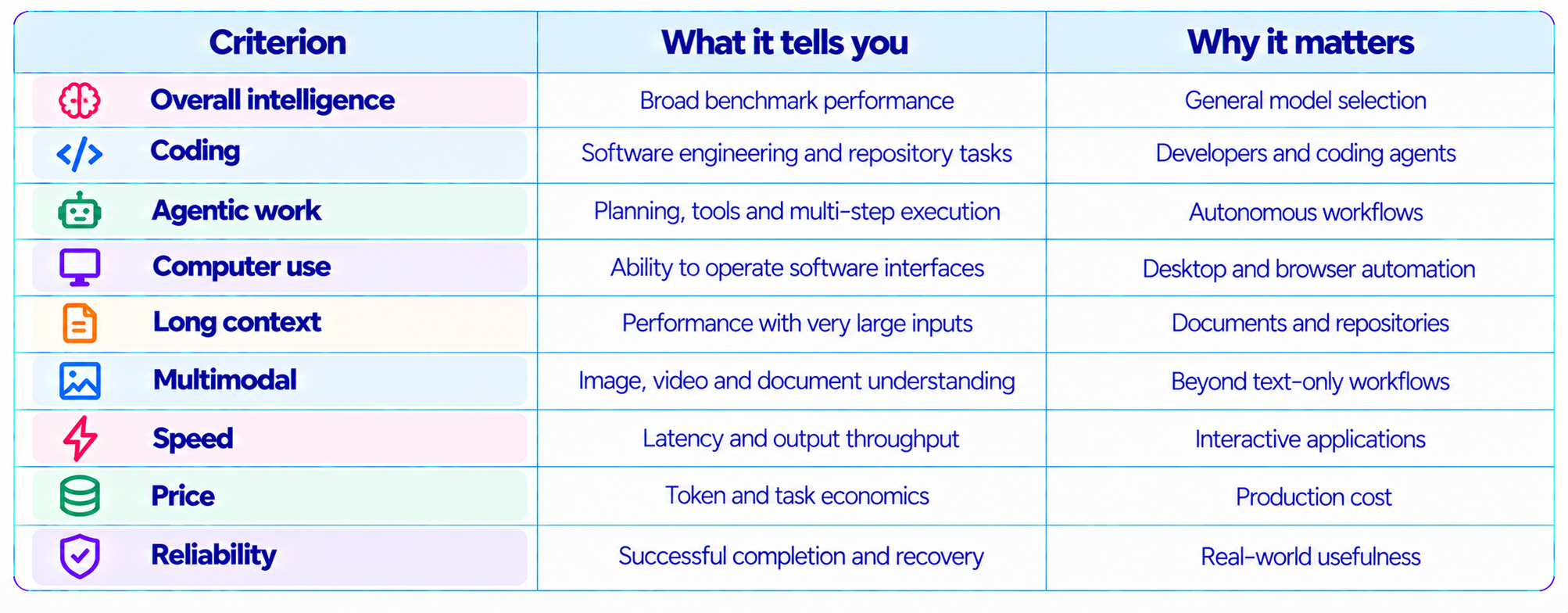
For this article, “best” means the strongest combination of capability and practical usefulness, while still identifying where individual models have clear advantages.
2. The September 2026 Frontier at a Glance
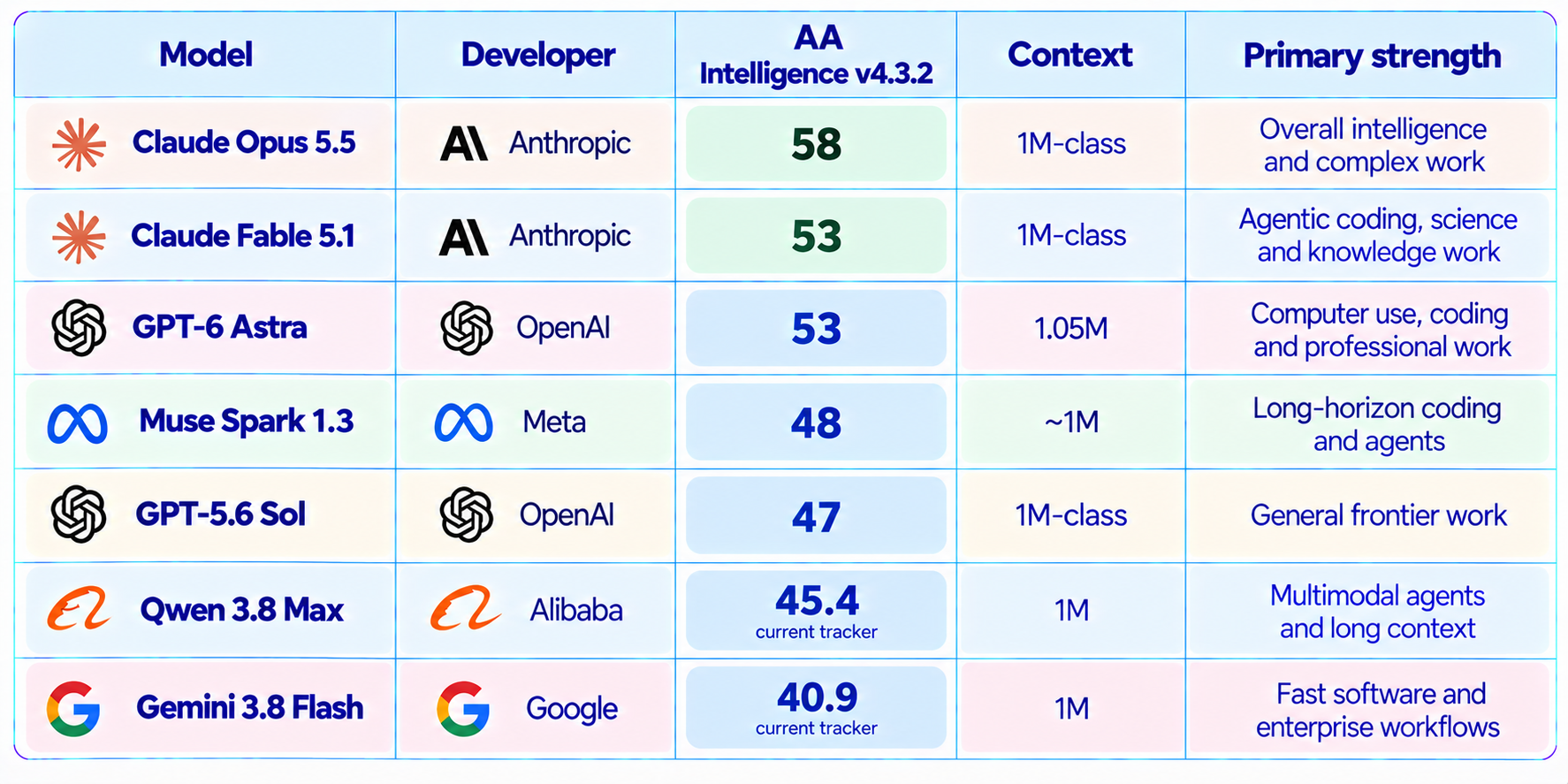
Artificial Analysis currently uses v4.3.2, which includes ten evaluations such as AA-Briefcase, GDPval-AA, AutomationBench, Terminal-Bench 4.0, SciCode, Humanity’s Last Exam, GDP.pdf, CritPt, AA-Omniscience and AA-LCR. Index versions are not directly comparable, so September scores should be read as a current snapshot.
3. Claude Opus 5.5: The Current Overall Leader
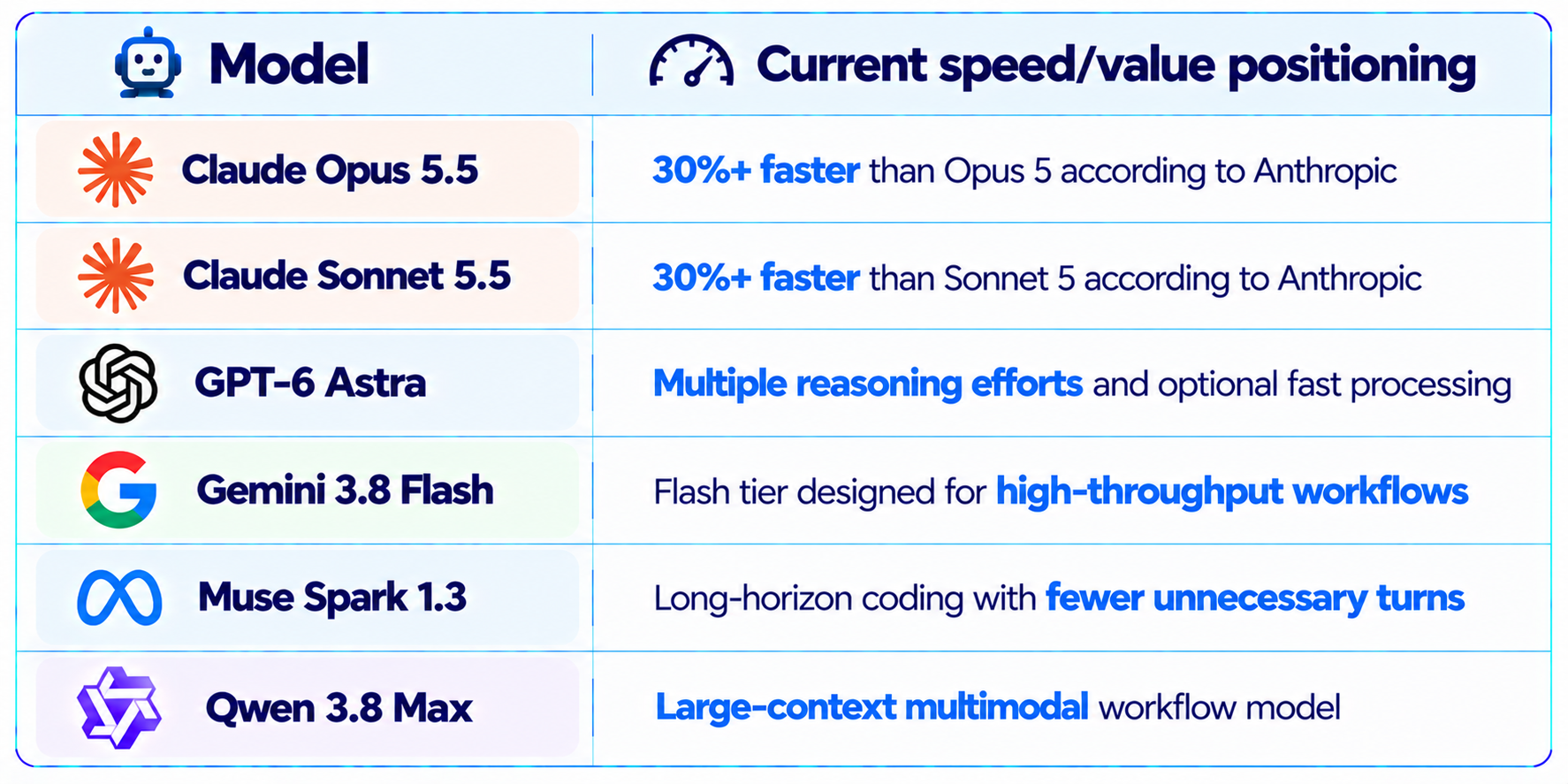
Claude Opus 5.5 is Anthropic’s newest flagship and the current leader on the Artificial Analysis Intelligence Index. Anthropic launched it on September 22, 2026, describing it as a major step up from Opus 5 with stronger complex work, lower serving cost and more than 30% faster output generation than its predecessor.
The independent benchmark picture matters here. Artificial Analysis currently gives Opus 5.5 a score of 58, the highest published Intelligence Index result. Anthropic’s own evaluations also show strong results across coding, scientific research, knowledge work and computer-oriented tasks.
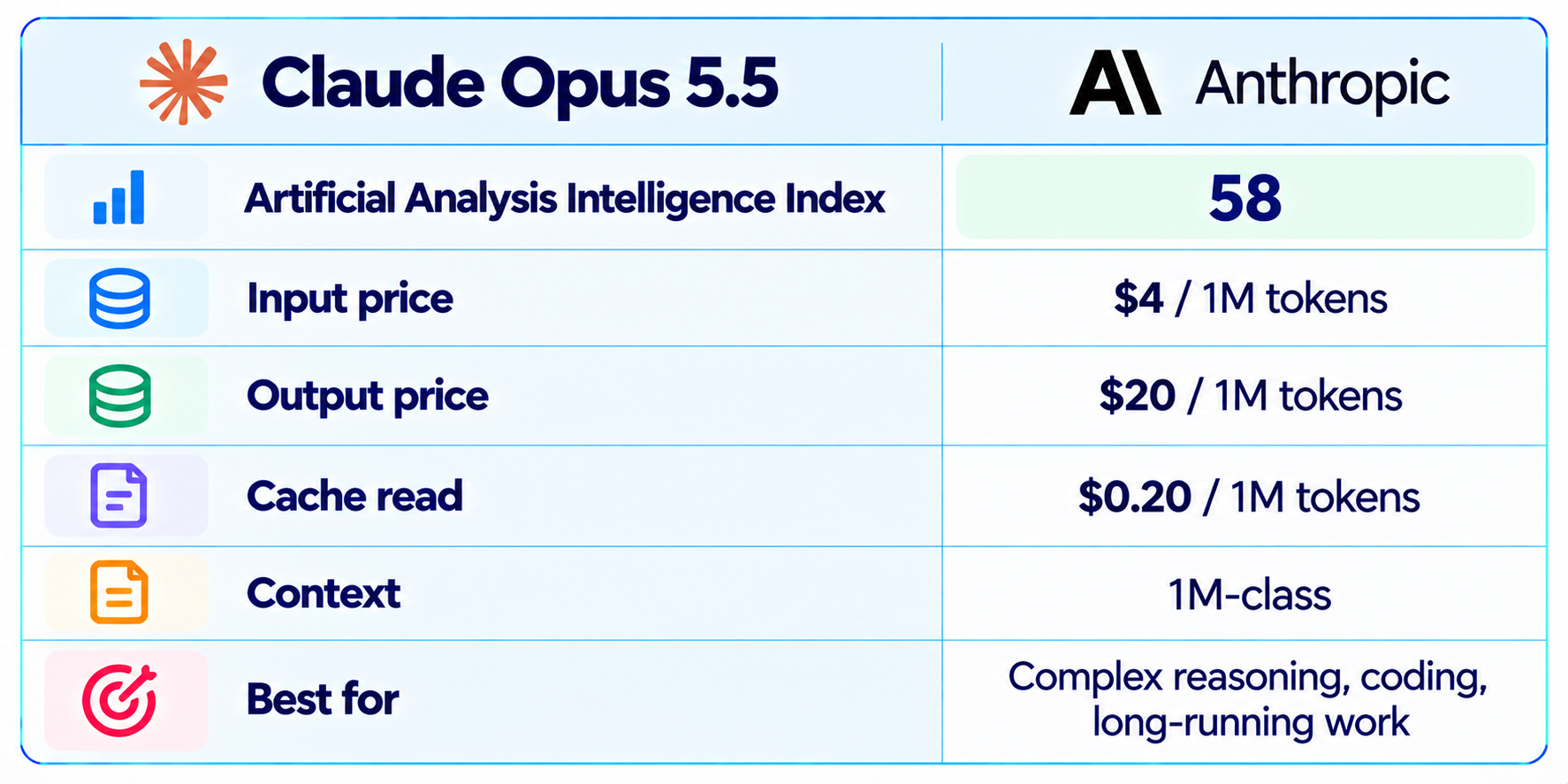
Opus 5.5 is expensive compared with Flash and Sonnet-class models, but Anthropic says it costs 40% less to run than Opus 5 on typical workloads. That makes it more practical than the older flagship while preserving a premium capability tier.
Read our Claude Opus 5.5 Review
4. GPT-6 Astra: Computer Use and Professional Work
GPT-6 Astra is OpenAI’s model for the hardest end-to-end work. Its API documentation lists a 1,050,000-token context window, 128,000-token maximum output and reasoning effort from low through max. OpenAI positions it for complex reasoning, coding, computer use, research and document creation.
OpenAI reports 72.6% on OSWorld 2.0 partial scoring and 41.4% on AutomationBench, along with 95.9% on BenchCAD. The launch evaluation also reports that Astra completed simulated computer-use tasks substantially faster than GPT-5.6 Sol.
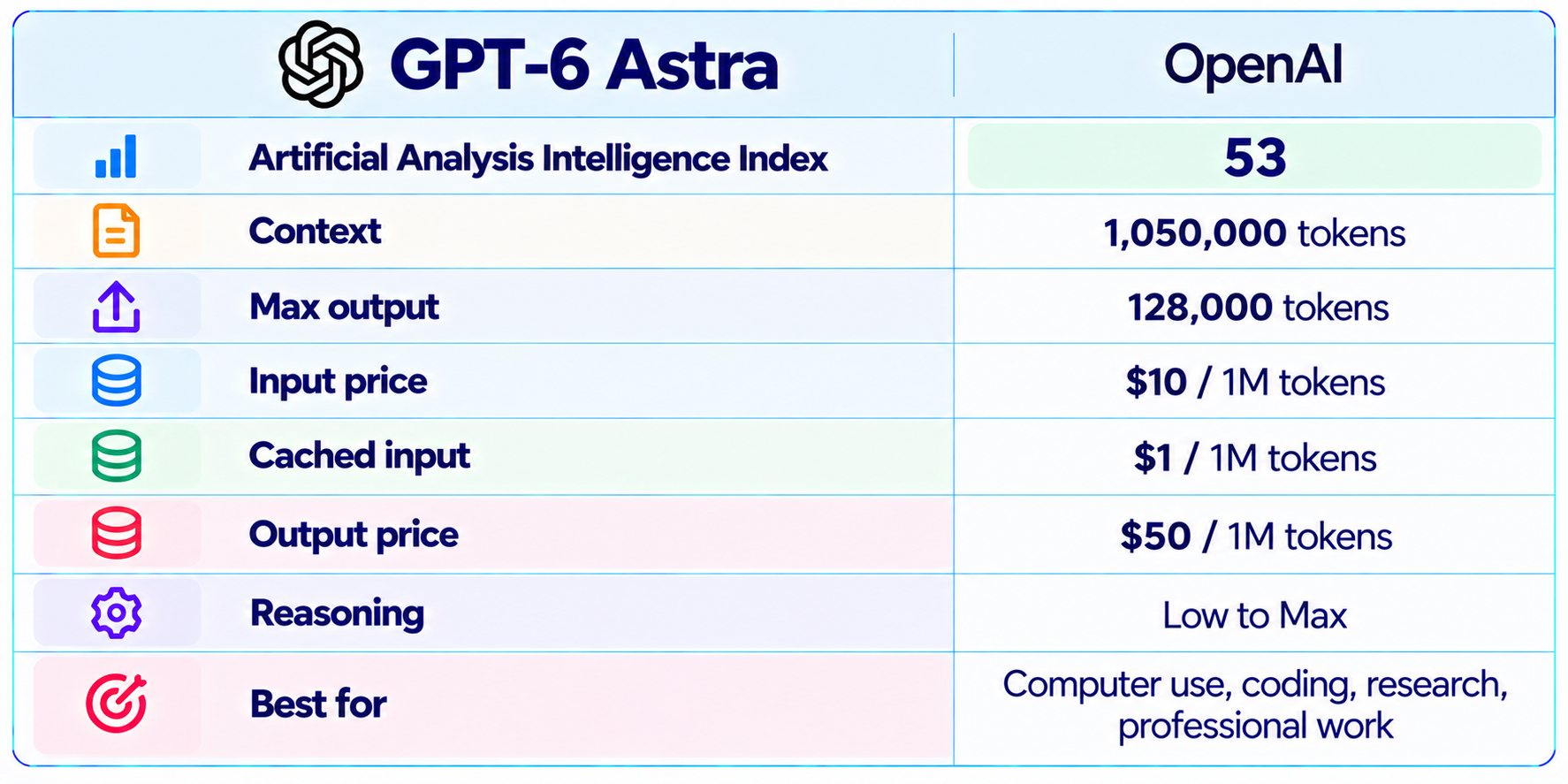
Astra is especially compelling when an AI system needs to operate software rather than only generate text. Its cost is high, so routing every simple request through Astra is usually inefficient.
5. Claude Fable 5.1: Long-Horizon Agents and Research
Claude Fable 5.1 remains a major model for sustained coding, scientific research and knowledge work. Anthropic reports 52.6% on Terminal-Bench-Science 0.1, 55.8% on Terminal-Bench 4.0, 1853 GDPval-AA v2, 65.0% on Humanity’s Last Exam with tools and 31.4% on AutomationBench.
Fable 5.1 costs $10 per million input tokens and $50 per million output tokens. Cache reads cost $0.25 per million tokens, and Anthropic says typical workloads are around 25% cheaper than Fable 5, with highly agentic workloads potentially saving around 45%.
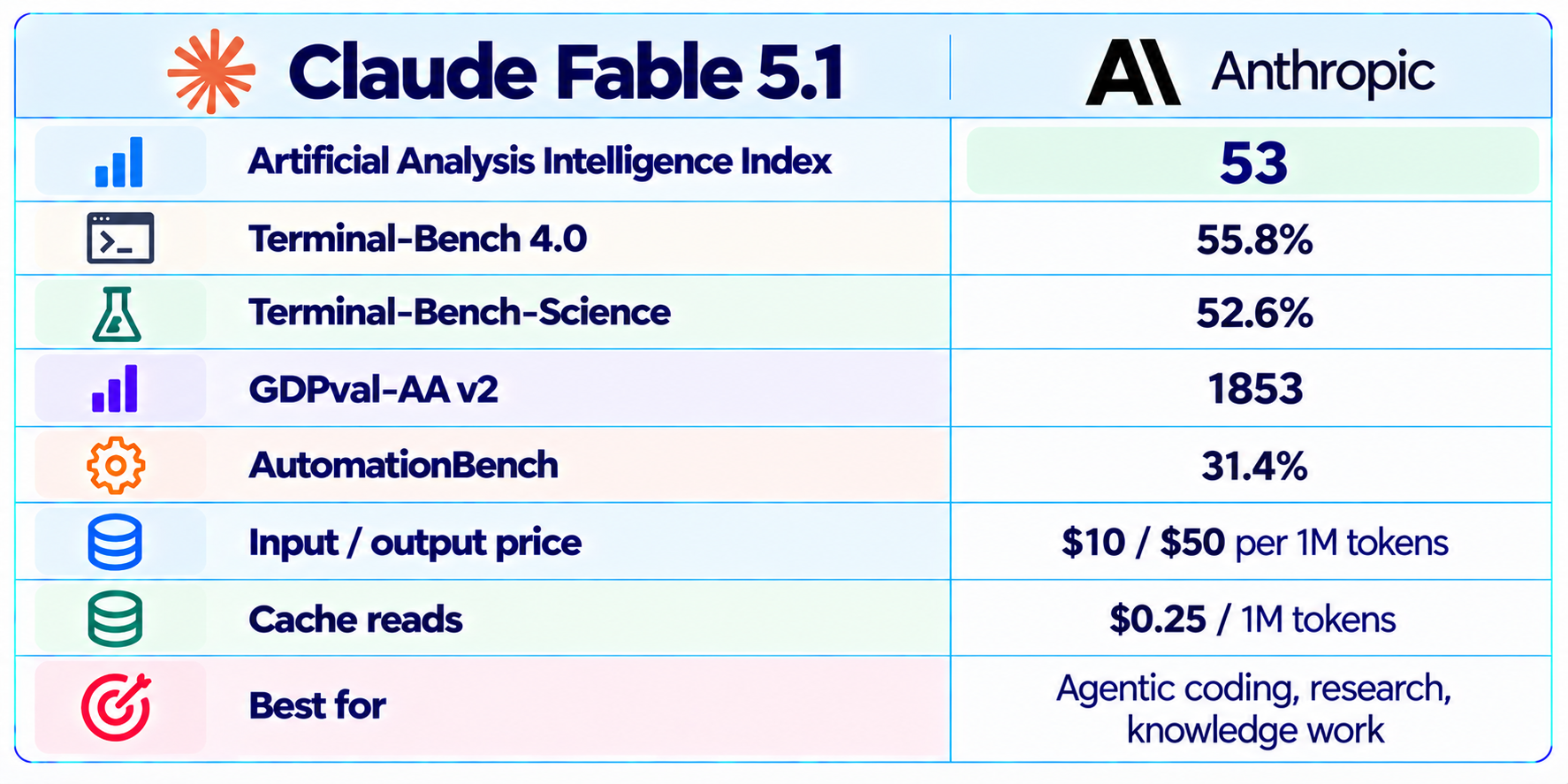
Fable 5.1 is particularly useful when one task involves many connected reasoning and tool-use steps. Its caching economics matter because agents repeatedly reuse system prompts, tool definitions and context.
Read our Claude Fable 5.1 Review
6. Claude Sonnet 5.5: Strong Coding at a Lower Cost
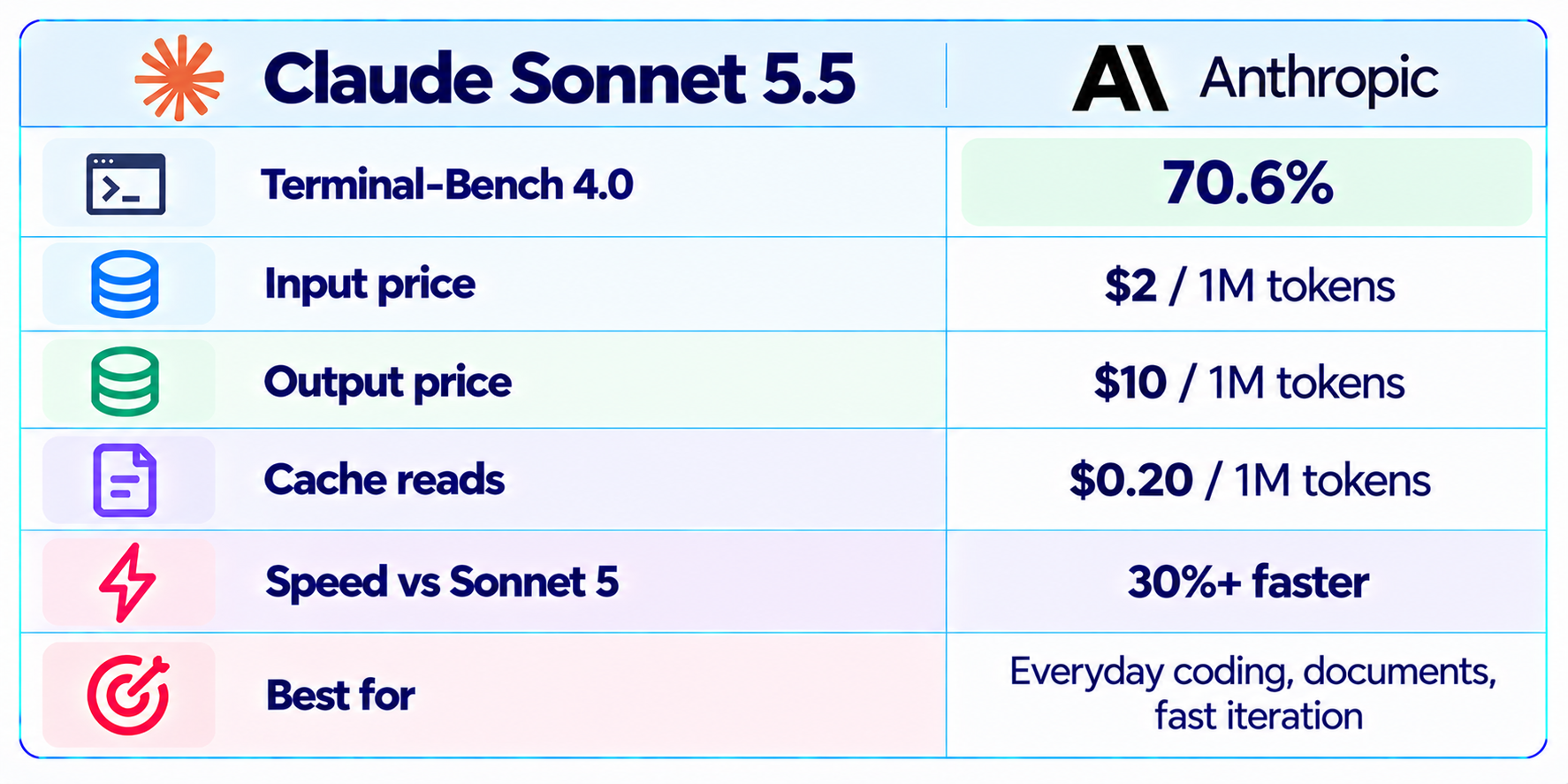
Claude Sonnet 5.5 launched on September 28, 2026 as a faster, lower-cost complement to Opus 5.5. Anthropic says it is more than 30% faster than Sonnet 5 and can cost up to 30% less per task because it needs fewer tokens.
Its strongest published coding signal is Terminal-Bench 4.0, where Anthropic reports 70.6%, compared with 10.3% for Sonnet 5. Sonnet 5.5 keeps the same headline API price as Sonnet 5 at $2 per million input and $10 per million output tokens, with $0.20 cache reads.
Read our Claude Sonnet 5.5 Review
7. Gemini 3.8 Flash: The High-Throughput Value Model
Gemini 3.8 Flash is Google’s latest Flash model and is generally available for production use. Google describes it as its most intelligent Flash model, engineered for long-horizon software engineering, autonomous agents and complex enterprise workflows. It supports a 1M-token context, up to 64K output tokens, tunable thinking levels and built-in tools.
The price is the major differentiator. Google currently lists introductory pricing of $0.75 per million input tokens and $3.75 per million output tokens through December 31, 2026. Standard pricing is scheduled to become $1.50 and $7.50 from January 1, 2027.
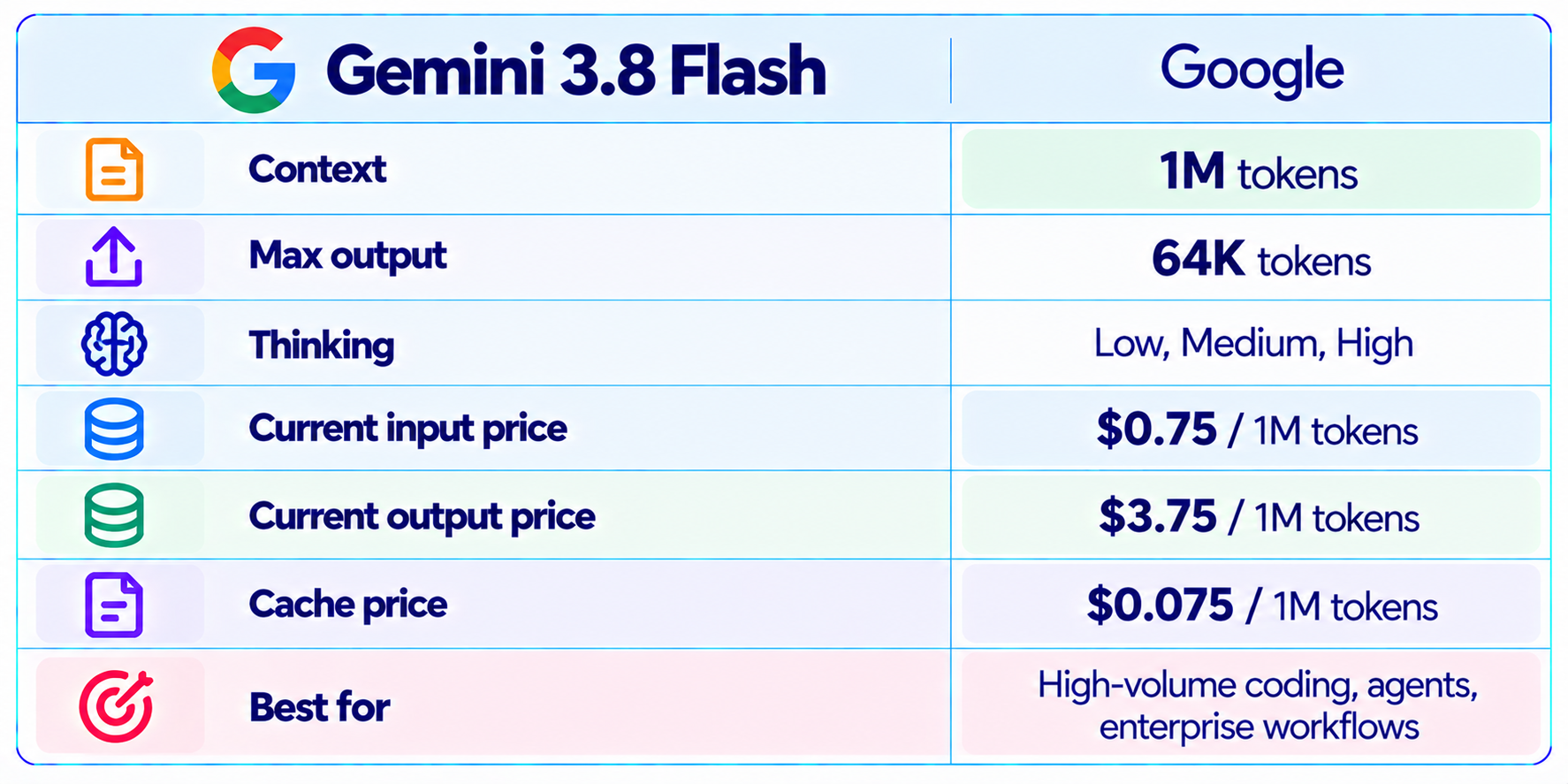
Gemini 3.8 Flash is therefore one of the strongest price-to-capability choices for production. It does not lead the general intelligence index, but its context, tools, reasoning and cost make it extremely practical for large request volumes.
Read our Gemini 3.8 Flash Review
8. Muse Spark 1.3: Agentic Coding Specialist
Meta’s Muse Spark 1.3 is designed for long-horizon coding and agentic workflows. Meta says it tracks context and prior results, handles messy or conflicting inputs, asks for input when needed and provides native multimodal perception across video, images and documents.
Artificial Analysis currently places Muse Spark 1.3 at 48 on Intelligence Index v4.3.2. Meta is also expanding access through Meta Model API, OpenRouter and cloud partners, making it practical to test in existing developer stacks.
Read our Meta Muse Spark 1.3 Review
9. Qwen 3.8 Max: Multimodal Long-Context Alternative
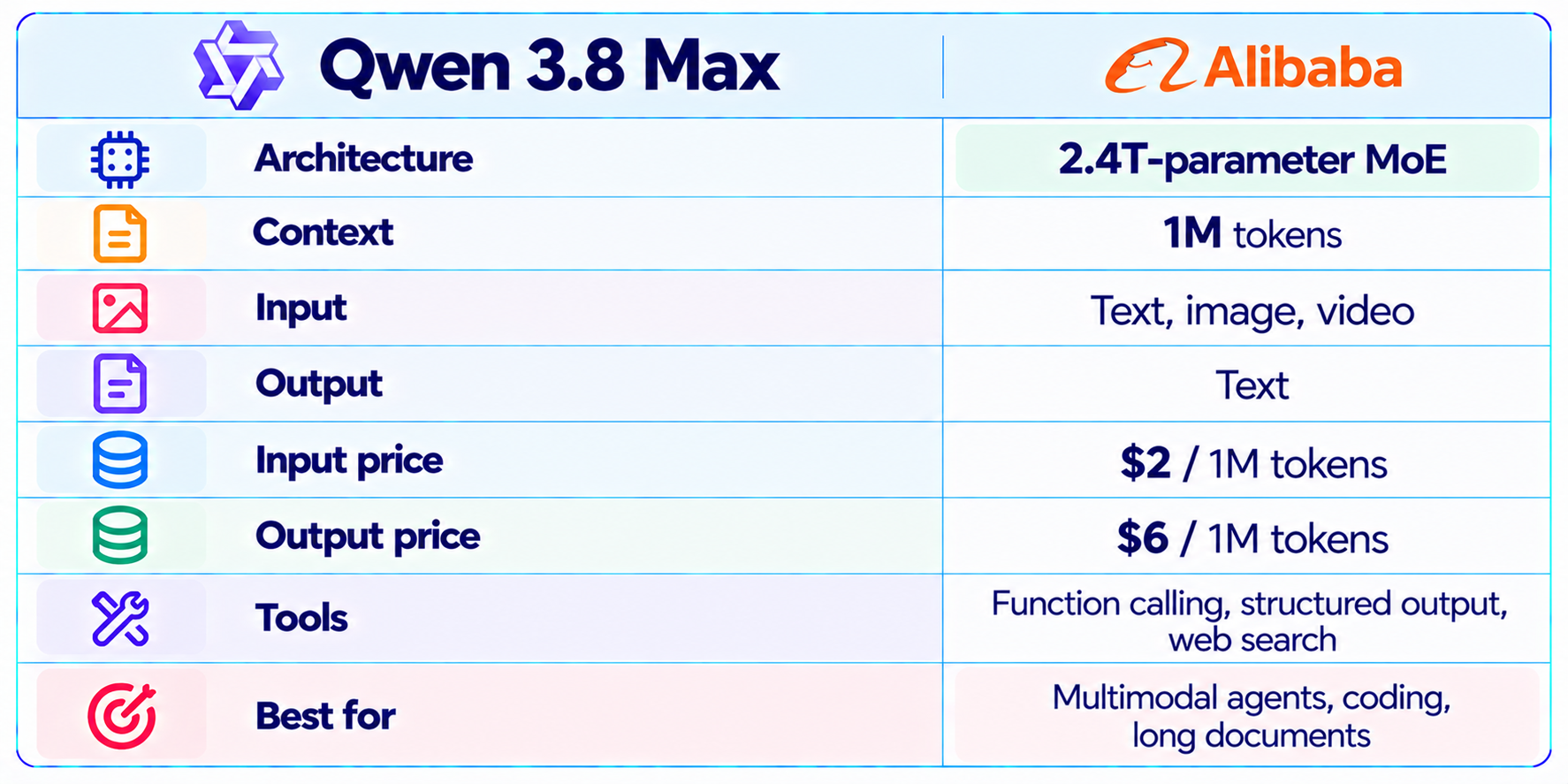
Qwen 3.8 Max is a 2.4-trillion-parameter MoE flagship with image, text and video input, a 1M-token context window, function calling, structured output and web search. Alibaba positions it for coding, office productivity and long-horizon autonomous development.
The international Qwen3.8-Max-0902 pricing is listed at $2 per million input tokens and $6 per million output tokens. The September 2 snapshot improved engineering-scale coding, multi-tool collaboration and native visual understanding.
Read our Qwen 3.8 Max 0902 Review
10. Best AI Model by Use Case
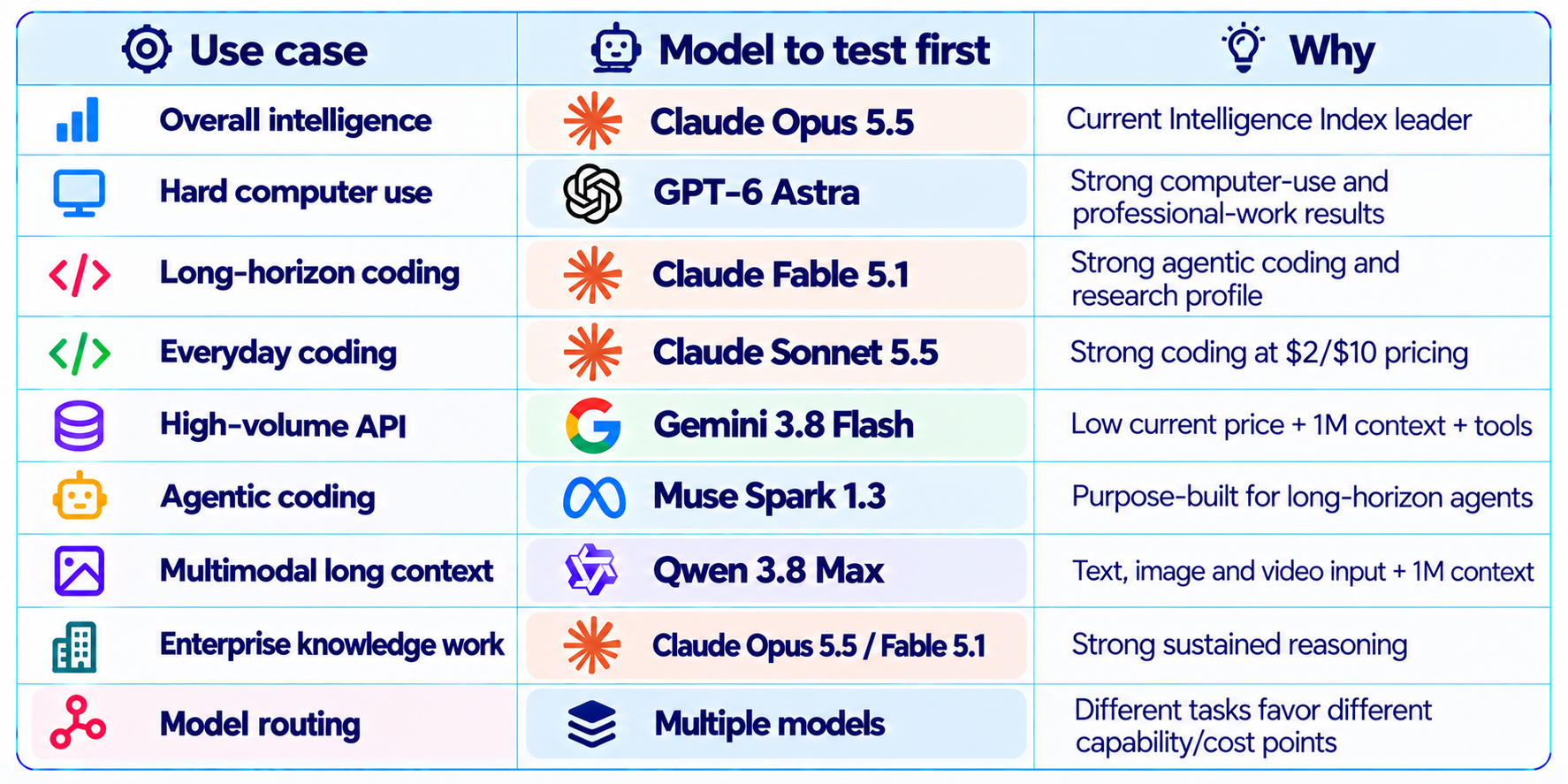
11. Best AI Model for Coding in September 2026
There is no single coding benchmark that captures every kind of software engineering. Terminal-Bench measures agentic terminal work, while other evaluations measure repository completion, debugging, browser interaction or professional development tasks.
Claude Fable 5.1, Claude Opus 5.5, GPT-6 Astra and Claude Sonnet 5.5 are strong first candidates for serious coding. Fable 5.1 has a strong agentic coding profile, Astra is strong at computer use and end-to-end professional work, Opus 5.5 currently leads the broad intelligence index, and Sonnet 5.5 offers a much lower API price. Gemini 3.8 Flash and Muse Spark 1.3 deserve testing when high-volume coding and agent economics matter.
12. Best AI Model for AI Agents
Agentic workloads change model selection. An agent may make dozens of calls, use tools and recover from failures, so task completion matters more than single-response quality.
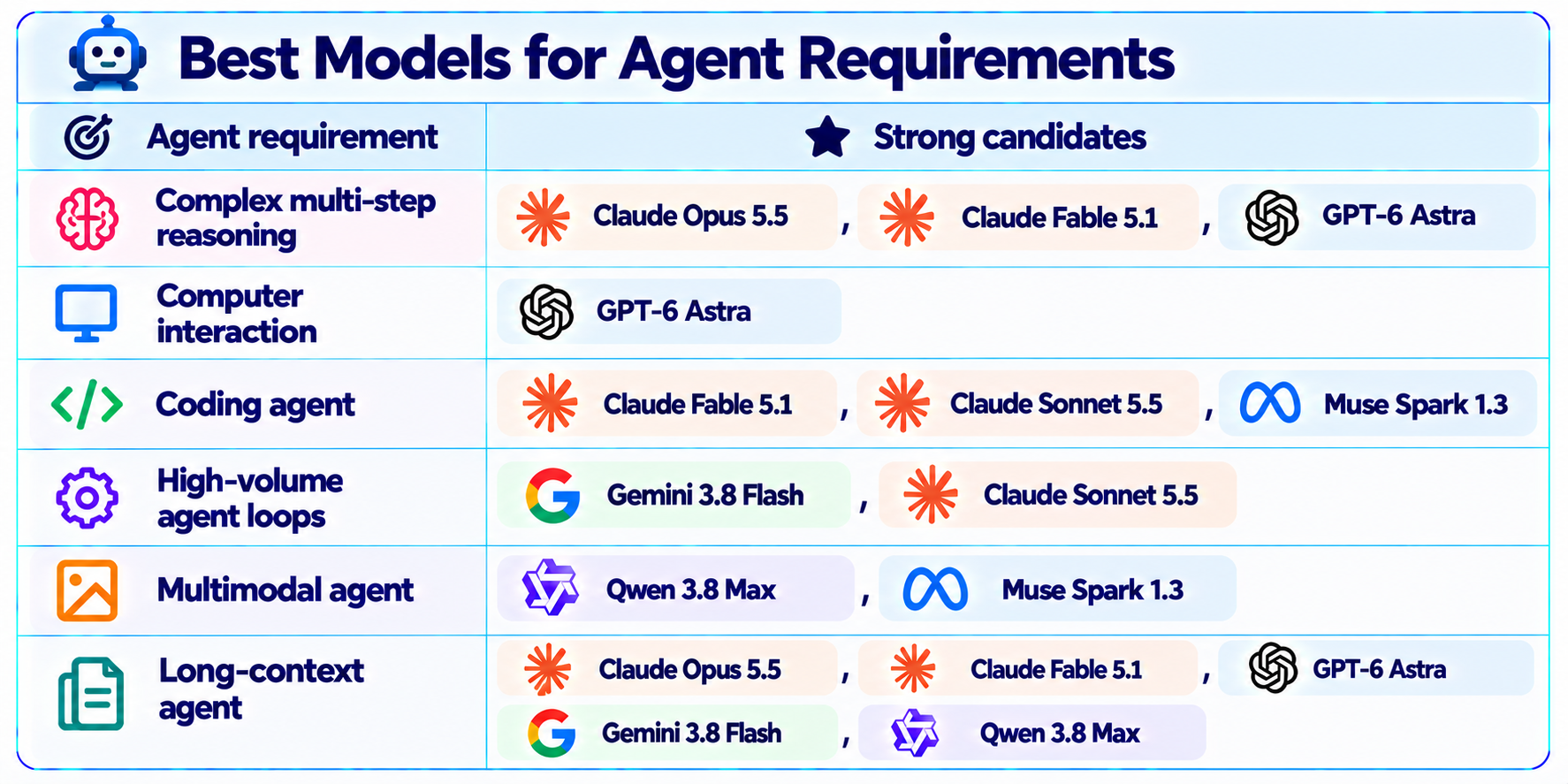
This is why model routing is becoming a core architecture. A router can reserve expensive frontier models for difficult steps and send routine extraction, classification, summarization and simple coding to cheaper models.
13. Best AI Model for Research and Long Documents
For research, context size is only part of the equation. The model must retrieve relevant evidence, stay consistent across long reasoning chains and separate evidence from unsupported claims.
Claude Fable 5.1 is particularly strong for agentic scientific research and knowledge work. GPT-6 Astra is built for research and document creation with a 1.05M context. Gemini 3.8 Flash offers a 1M context and enterprise-oriented long-horizon workflows, while Qwen 3.8 Max adds image and video input to its 1M context.
14. Best AI Model for Price-to-Performance
The answer changes depending on whether you measure price per token or price per completed task. Token pricing is easy to compare, but an agent that needs twice as many attempts can erase a low token price.
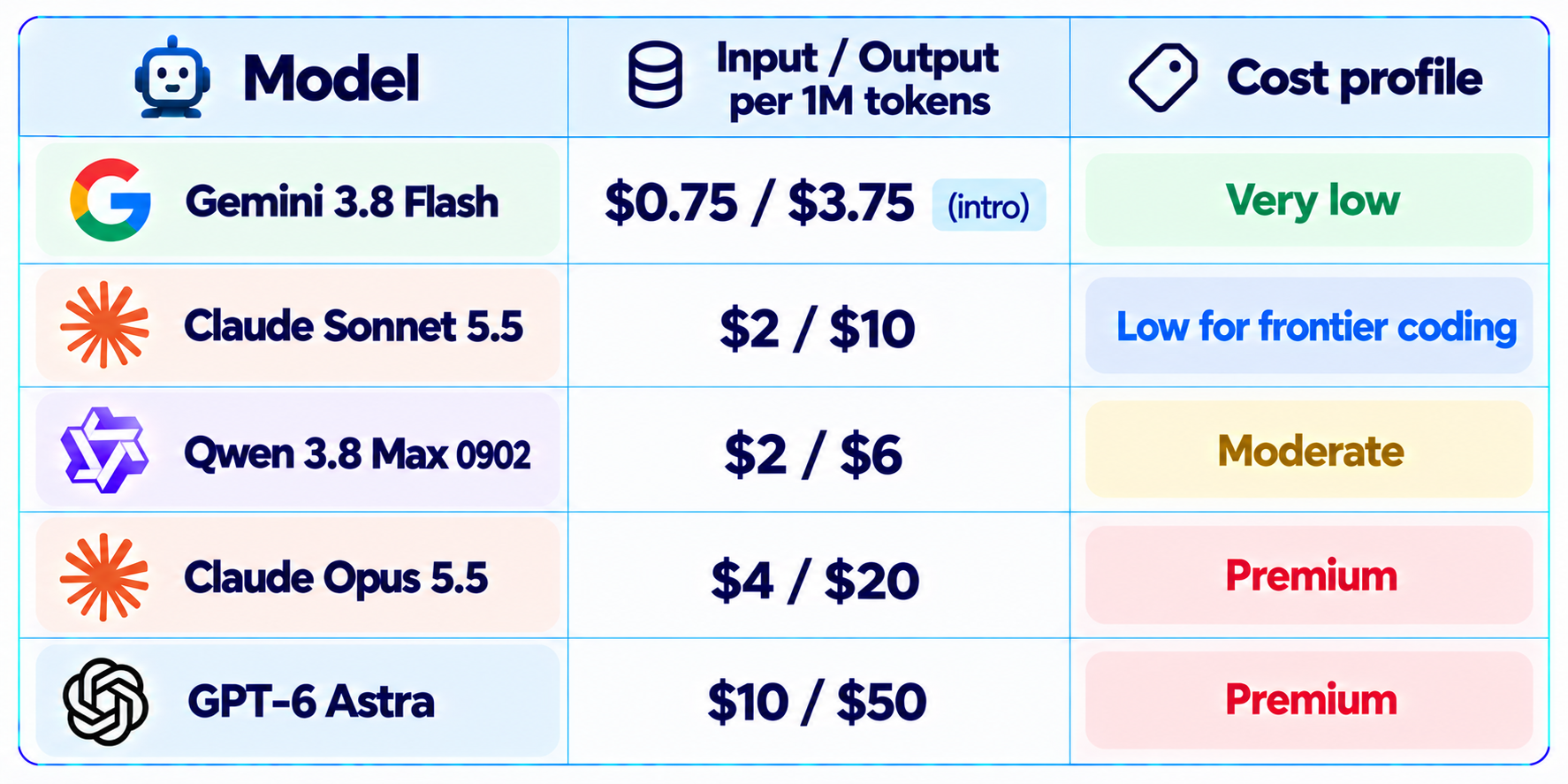
For pure API cost, Gemini 3.8 Flash is dramatically cheaper than the top reasoning models. For serious coding at a lower price than the flagship tier, Sonnet 5.5 is especially interesting. For tasks where higher capability reduces retries and human intervention, a premium model can still have lower cost per successful outcome.
16. Speed Matters More Than Most Leaderboards Show
A more intelligent model can still create a worse product experience if latency is high. This matters for coding assistants, support and multi-call agents.
17. Why There Is No Permanent Number One
The September leaderboard already shows how quickly the answer changes. Artificial Analysis v4.3.2 now uses ten evaluations, so scores should be treated as a dated snapshot rather than a permanent ranking.
That is why a monthly AI model leaderboard should be treated as a dated snapshot rather than a permanent ranking. The best model today can become the second-best option after a new release, a benchmark refresh or a major pricing change.
18. The Best Model for Developers Is Often a Stack
For a serious AI product, a single-model strategy can be inefficient. A practical stack can use a fast router, a coding worker, a frontier reasoning model and a multimodal worker.
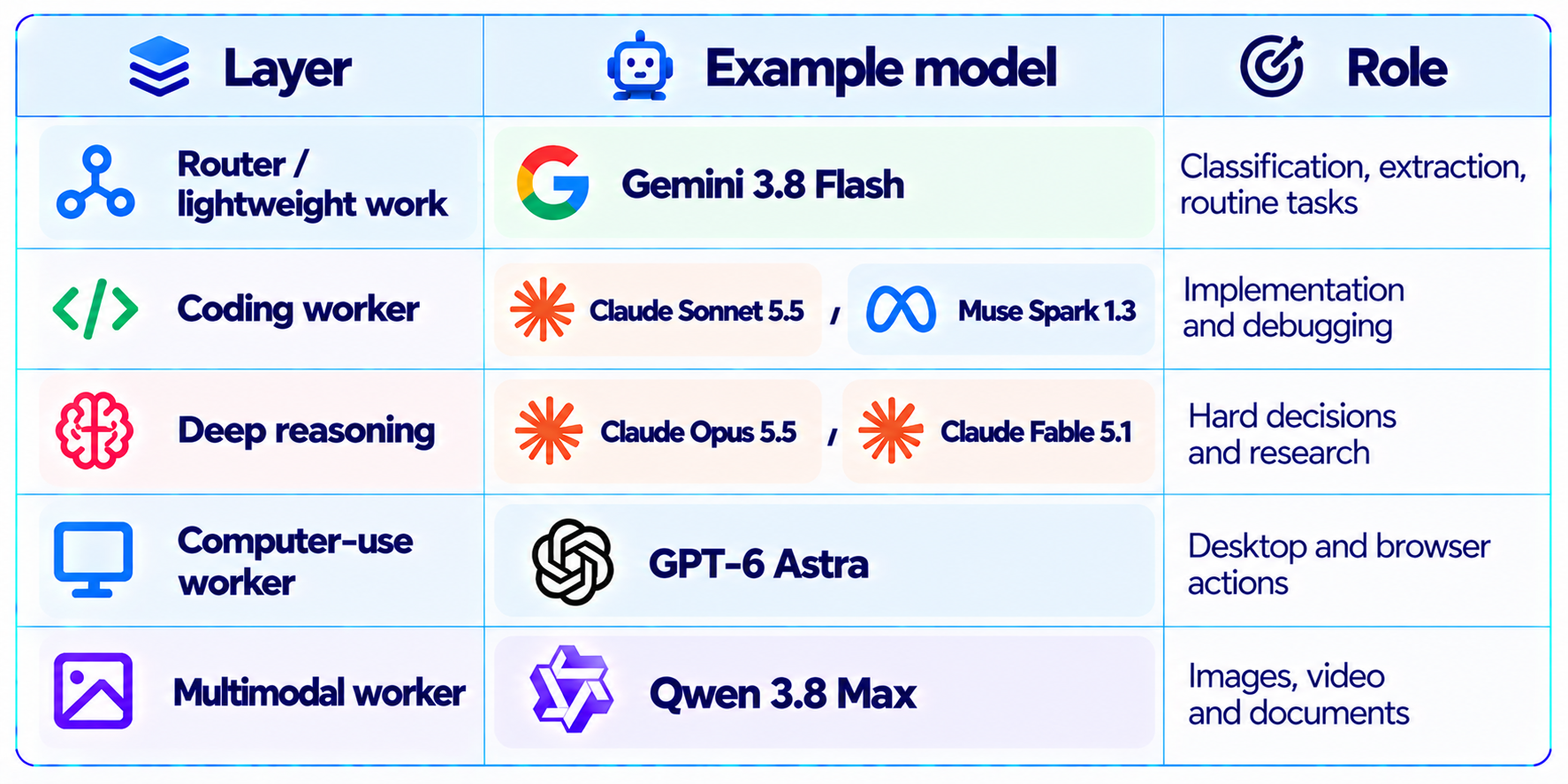
Choose the stack from measured task success, latency, cost and failure recovery on representative workloads.
19. How to Choose the Best AI Model for Your Project
- Start with the actual task, not the model brand.
- Build a test set of 30 to 100 representative tasks.
- Measure correctness and task completion first.
- Measure latency from request to successful completion.
- Calculate cost per completed task, not only cost per token.
- Test tool calling and recovery from failed actions.
- Test long-context performance with real documents.
- Test multimodal tasks using real screenshots, PDFs or videos.
- Keep a stronger fallback model for difficult cases.
- Re-test the stack whenever a major model or benchmark version changes.
A benchmark score should answer a specific question. Artificial Analysis Intelligence Index is useful because it combines several evaluations, but it is still an aggregate. Terminal-Bench is more relevant when an agent operates a terminal, OSWorld matters for graphical software, GDPval measures professional work, and AA-LCR measures long-context reasoning. The benchmark that resembles the actual job is more informative than simply copying the highest headline score.
20. Final Verdict: What Is the Best AI Model of September 2026?
If the question is strictly about the strongest current independent aggregate benchmark, Claude Opus 5.5 is the answer. Artificial Analysis v4.3.2 currently gives it 58, the highest published Intelligence Index score.
The more useful answer is a capability map. GPT-6 Astra is exceptionally compelling for computer use and professional end-to-end work. Claude Fable 5.1 remains a powerful choice for long-running coding, research and knowledge workflows. Claude Sonnet 5.5 brings strong coding performance to a much cheaper tier. Gemini 3.8 Flash is the standout high-throughput value option, Muse Spark 1.3 is built around agentic coding, and Qwen 3.8 Max is a strong multimodal long-context choice.
The price gap is large enough to change architecture: Gemini 3.8 Flash is $0.75/$3.75, Sonnet 5.5 is $2/$10, Opus 5.5 is $4/$20 and Astra is $10/$50 per million input/output tokens.
My practical September 2026 scorecard is: Claude Opus 5.5 for overall capability, GPT-6 Astra for computer use and hard professional workflows, Claude Fable 5.1 for long-horizon agents and research, Claude Sonnet 5.5 for everyday coding value, Gemini 3.8 Flash for cost-efficient high-volume AI, Muse Spark 1.3 for agentic coding and Qwen 3.8 Max for multimodal long-context work.
Frequently Asked Questions
What is the best AI model in September 2026?
Claude Opus 5.5 currently leads the Artificial Analysis Intelligence Index v4.3.2 with a score of 58. The best model for a specific project can differ by coding, computer use, price, speed or multimodal requirements.
Is Claude Opus 5.5 better than GPT-6 Astra?
They lead in different areas. Opus 5.5 currently has the higher aggregate Artificial Analysis score, while GPT-6 Astra has a particularly strong computer-use and professional-work profile.
What is the best AI model for coding in 2026?
Claude Opus 5.5, Claude Fable 5.1, GPT-6 Astra and Claude Sonnet 5.5 are strong candidates. The right choice depends on repository complexity, agent behavior, price and latency.
What is the cheapest powerful AI model in September 2026?
Gemini 3.8 Flash has one of the lowest prices among current frontier-oriented models at $0.75 per million input tokens and $3.75 per million output tokens through December 2026.
What is the best AI model for agents?
Claude Fable 5.1, Opus 5.5, GPT-6 Astra and Muse Spark 1.3 are strong candidates. For high-volume agents, Gemini 3.8 Flash can be attractive because of its lower token cost.
What is the best AI model for computer use?
GPT-6 Astra is one of the strongest choices because OpenAI specifically designed it for computer use and reports strong OSWorld and professional-work results.
What is the best AI model for long documents?
Claude Opus 5.5, Claude Fable 5.1, GPT-6 Astra, Gemini 3.8 Flash and Qwen 3.8 Max all support approximately million-token-scale contexts, but long-context quality should be tested on real documents.
Recommended Blogs
Latest AI Models Comparison 2026: GPT-6 Astra vs Fable 5.1 vs Gemini 3.8 Flash
Claude Fable 5.1 Review: Benchmarks, Pricing & Is It Worth It?
Claude Sonnet 5.5 Review: Benchmarks, Price & Is It Worth It?
Gemini 3.8 Flash Review: Benchmarks, Price & Is It Worth It?
Qwen 3.8 Max 0902 Review: Benchmarks, Price & Is It Worth It?
Quasar 438B Review: Benchmarks, Speed, Price & Is It Worth It?
How to Secure AI Coding Agents: Permissions, Sandboxing, MCP & Secrets
Resources & Community
Join our community of 70,000+ AI enthusiasts and learn to build powerful AI applications. Build Fast with AI helps creators, developers and teams understand and implement practical AI.
Agentic AI Launchpad 2026
A structured 6-week cohort program that takes you from AI basics to building and deploying real-world agentic AI systems. Includes live sessions, expert mentorship, project reviews and a builder community network.
Ready to go from learning to building? Join the next cohort: Agentic AI Launchpad 2026
Free AI Resources
Access free tools, workshops and micro-learning to keep building.

