



DeepSeek-V4.1-Flash-1017 Review: Can a Low-Cost Model Handle Serious Agentic Coding?
DeepSeek-V4.1-Flash-1017 is the October 17 update to DeepSeek V4.1 Flash, and its appeal is concrete: higher scores across the company's published benchmark suite, shorter outputs, faster task completion and no change to the API model name or token prices. Developers can keep using deepseek-flash to access the current checkpoint.
The update is aimed at more than quick chat. DeepSeek highlights coding agents, terminal-based work, complete project generation and agent harnesses such as DeepSeek Harness, Tencent CodeBuddy and WorkBuddy. Its evaluation covers software engineering, automation, visual tasks and general reasoning, offering a broader view than a single headline score.
The standout results are 77.0 on DeepSWE v1.1, 42.3 on Terminal-Bench 4.0, 29.1 on ProgramBench and 60.5 on Automation-Bench v1.0. These are DeepSeek-published results, so they should be interpreted with their test harnesses and evaluation setups in mind. Even so, the breadth of improvement over the September checkpoint makes this a meaningful update for teams building low-cost AI agents.
QUICK ANSWER
DeepSeek-V4.1-Flash-1017 is a refreshed version of DeepSeek V4.1 Flash, released on October 17, 2026. It improves the previous checkpoint across DeepSeek's published reasoning, coding, agent and vision-related benchmarks, while reducing task runtime and output length. Existing API integrations can continue using deepseek-flash; the model identifier and calling method remain unchanged.
Its main benchmark highlights are 77.0 on DeepSWE v1.1, 42.3 on Terminal-Bench 4.0, 29.1 on ProgramBench, 68.2 on NL2Repo-Bench, 60.5 on Automation-Bench v1.0.6 and 72.1 on Apex Bench v1.1. DeepSeek also reports 83.0 on Chartography with tools and 92.5 on BabyVision with tools. The model retains a 1M-token context window, supports native image input, tool calls and JSON output, and allows thinking and non-thinking modes.
Off-peak API pricing is $0.15 per million cache-miss input tokens, $0.003 per million cache-hit input tokens and $0.60 per million output tokens. Peak rates are double. DeepSeek defines peak periods in UTC on weekdays, excluding Chinese public holidays. Check the live pricing page before deploying.
Verdict: Flash 1017 is especially compelling for cost-conscious coding agents, terminal automation, repository work and workflows that benefit from long context and native vision. It does not lead every benchmark, but its combination of stronger agent results and low API costs makes it worth evaluating as a default worker model with a more capable fallback for the hardest tasks.
1. What Is DeepSeek-V4.1-Flash-1017?
DeepSeek-V4.1-Flash-1017 is a new checkpoint of DeepSeek V4.1 Flash, not a separate product family. The suffix identifies the October 17 version. DeepSeek says the checkpoint improves benchmark performance, finishes tasks faster and generates shorter outputs than the September release. The company describes this as a better performance-cost tradeoff because a task can become cheaper when the model uses fewer output tokens and less time to complete the same work.
The deployment detail matters: the API model name remains deepseek-flash, and the official website and app have been updated. Developers using that identifier do not need to change their integration to receive the newer checkpoint. Legacy aliases such as deepseek-v4-flash and deepseek-v4-flash-vision-exp are listed as compatibility names that route to the current Flash model.
DeepSeek positions the model around agentic work: coding, software project construction, terminal operations, automation and tasks requiring multiple steps. Its launch announcement includes examples of complete project generation, including a web-based racing game and 3D scenes. Those examples demonstrate the intended workflow, not a guarantee that every project will work correctly on the first attempt.
2. Specifications
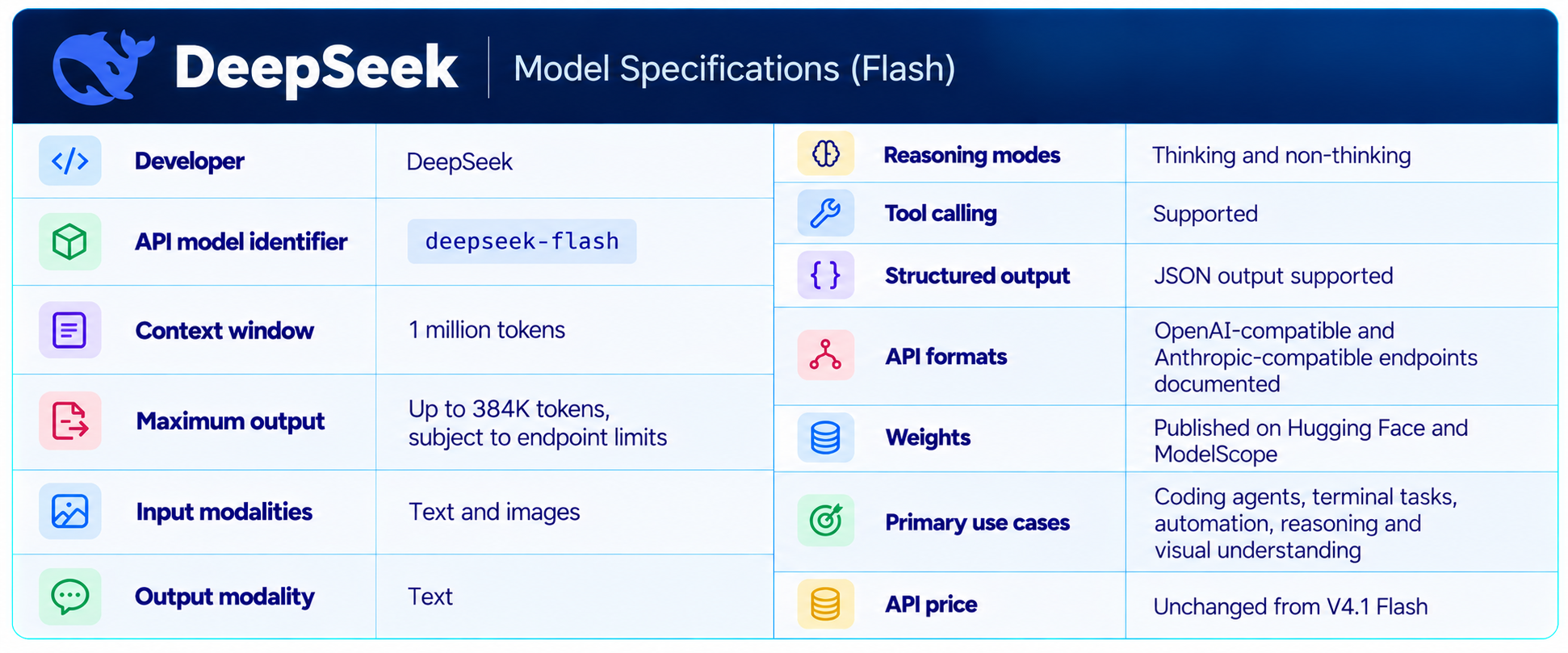
The 1M context window is useful for repository analysis and multi-document workflows, but maximum context should not be the default target. Large prompts increase processing and can dilute attention when they contain irrelevant information. Retrieval, clear task boundaries and concise tool results still matter.
3. Benchmark Results
The most useful way to assess 1017 is to compare it with the September V4.1 Flash checkpoint on the same published benchmark set. The table uses DeepSeek's reported figures. These tests are not interchangeable: some use tools, some focus on terminal or repository work, and the harness affects outcomes.
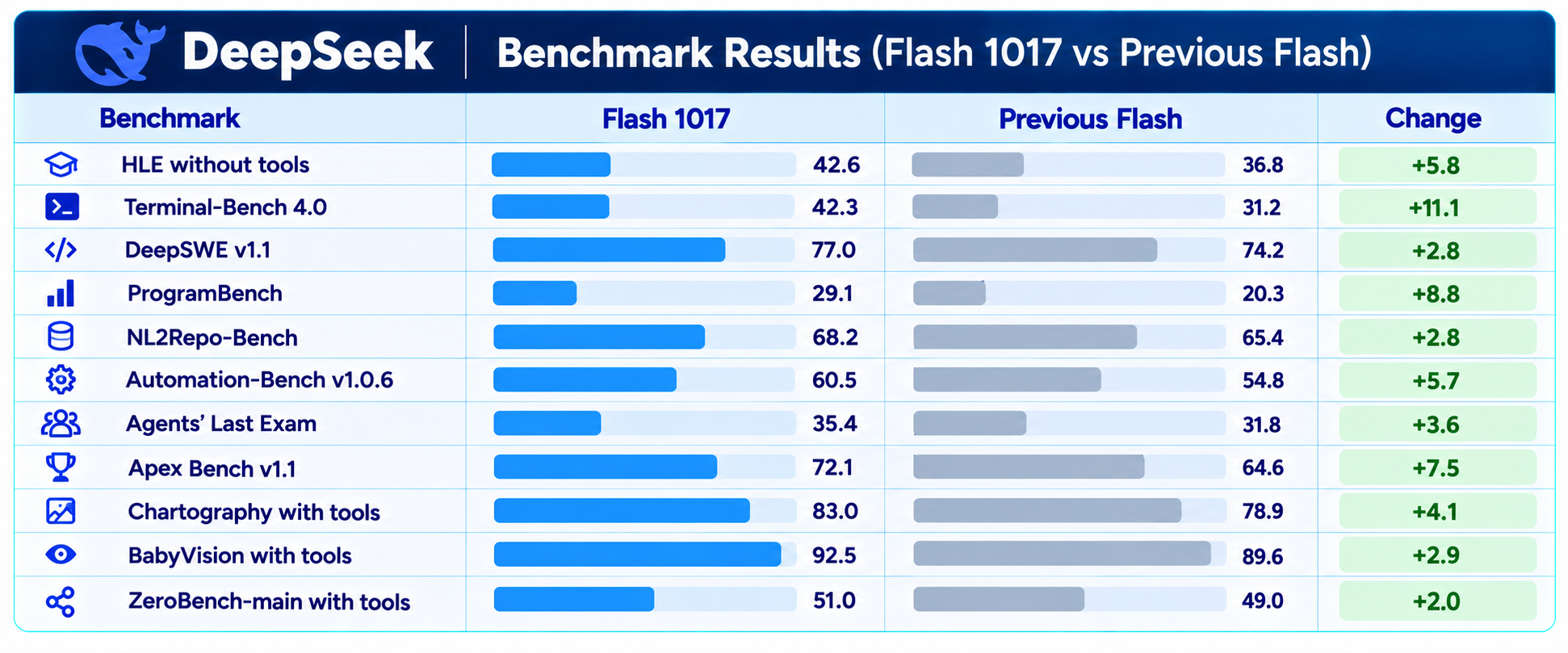
The largest increases are Terminal-Bench 4.0, ProgramBench and Apex Bench. That pattern is consistent with DeepSeek's emphasis on practical agent workflows and software project completion. HLE also improves, although DeepSeek separately reports 44.0 on the text-only subset. The 42.6 headline figure and 44.0 subset result should not be mixed because they refer to different evaluation slices.
For fair comparisons, record benchmark version, tool access, harness, sampling settings and whether a score is pass@1 or pass@5. A model can look different when an evaluation changes from direct answering to a tool-using agent loop.
4. DeepSWE v1.1: The Coding-Agent Headline
DeepSWE v1.1 evaluates software-engineering tasks rather than only short code completions. Flash 1017 scores 77.0, up from 74.2 for the previous checkpoint. DeepSeek's comparison table also lists GPT-5.6 Sol at 73.0 and Claude Opus 5 at 74.0 on this evaluation.
That result is notable, but it does not mean Flash 1017 is better than every frontier model for all coding work. It means that in this particular DeepSWE v1.1 setup, the checkpoint records a higher score than the listed comparison models. Other evaluations measure different skills, and a model can lead on one coding-agent benchmark while trailing on another.
For a real development team, the practical question is whether it can understand a repository, make a focused change, run tests, respond to failures and avoid unrelated regressions. DeepSWE is a useful signal, but teams should still run repository-level tests before replacing a production coding model.
5. Terminal-Bench 4.0: Better at Operating Tools
Terminal-Bench evaluates agents working through terminal environments. Tasks can require inspecting files, running commands, installing dependencies, debugging and verifying that the requested outcome was achieved. The new model scores 42.3, compared with 31.2 for the previous checkpoint.
An 11.1-point improvement is the largest change in the published comparison table. DeepSeek says its Terminal-Bench evaluation used the Claude Code framework. That detail matters because the harness determines how the model receives tool results, chooses the next action and handles errors. Benchmark numbers from different harnesses should not be treated as perfectly controlled comparisons.
The score makes Flash 1017 more interesting for terminal coding agents and developer automation. Still constrain the environment: use a disposable worktree or sandbox, limit access to secrets, require review before destructive commands and run tests before accepting changes.
For operational safeguards, read How to Secure AI Coding Agents: Permissions, Sandboxing, MCP & Secrets.
6. ProgramBench and NL2Repo-Bench
ProgramBench rises from 20.3 to 29.1, an 8.8-point increase. NL2Repo-Bench moves from 65.4 to 68.2. Together, these evaluations help examine the gap between understanding a programming request and making changes in a real project context.
ProgramBench's improvement suggests stronger performance on its programming tasks, while NL2Repo-Bench measures repository-oriented work from natural-language instructions. Neither result guarantees success in every unfamiliar codebase. Repository quality, test coverage, dependency setup and request clarity all influence outcomes.
When using Flash 1017 on a repository task, provide expected behavior, relevant files, exact error output and constraints. Ask the agent to inspect before editing, make a small plan, implement, run tests and summarize what it verified. This creates a repeatable path from instruction to evidence.
7. Automation and Agent Benchmarks
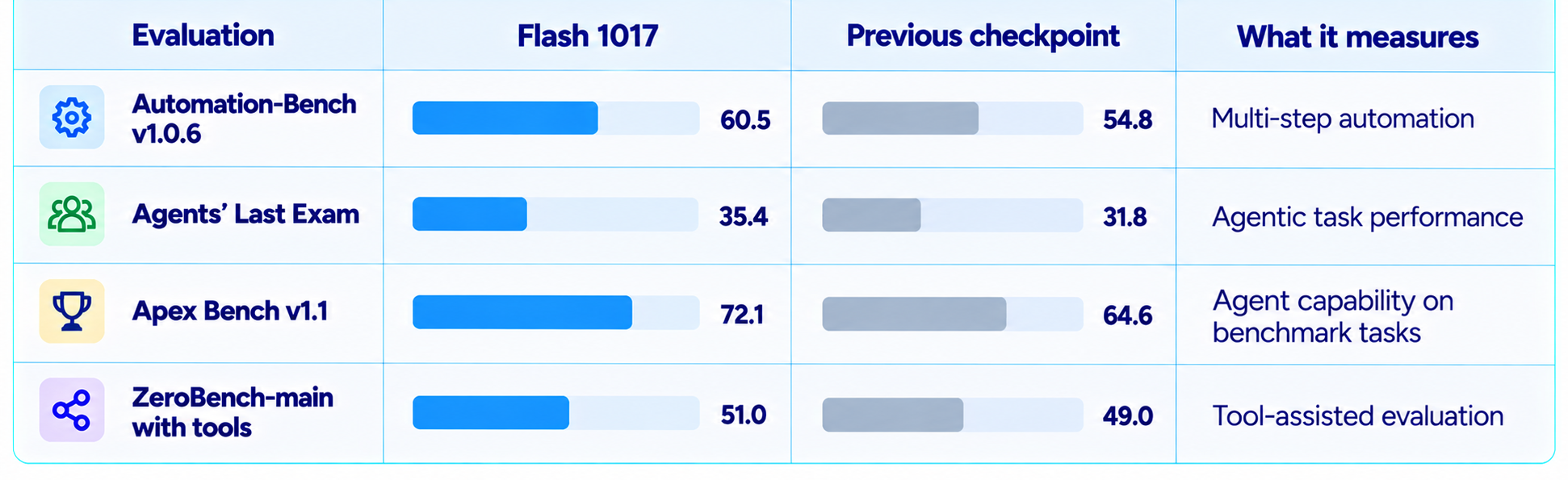
Useful agents are more than chat interfaces. They need to select tools, interpret results, recover from errors and stop when the task is complete. Improvements across several agent-focused evaluations support DeepSeek's argument that 1017 is better suited to agent harnesses than the previous release.
An agent benchmark does not fully measure operational reliability. In production, track tool-call failure rate, retries, wrong-file edits, completion time, escalation rate and the number of human interventions. Those metrics can matter more than a leaderboard position.
8. Vision Benchmarks and Image Input
DeepSeek reports 83.0 on Chartography with tools and 92.5 on BabyVision with tools. These results point to tasks where visual understanding is combined with tools or structured execution. The model supports native image input, so it is not limited to text-only coding prompts.
For developers, image input can help interpret screenshots of errors, UI references, diagrams, charts and visual requirements. It can be useful for frontend implementation when paired with a clear description of expected behavior and the relevant codebase.
Visual input still needs verification. A screenshot may not reveal responsive behavior, hidden states, accessibility requirements or interaction logic. Treat visual understanding as one input to implementation, then verify the result in a browser and with tests.
9. Architecture, Context and Output Limits
DeepSeek V4.1 Flash's published architecture is a 552B-parameter mixture-of-experts model with a causal encoder-decoder design. DeepSeek reports 8B active parameters for input processing and 16B for output generation. The design aims to preserve capability while controlling inference and memory costs. These are architecture-level figures, not a claim that the model runs comfortably on a single consumer GPU.
The model supports a 1M-token context window and a maximum output length listed as 384K tokens. Actual limits can depend on endpoint constraints and request configuration. Large outputs are rarely best for ordinary coding tasks; ask for a concise patch, tests and a summary rather than regenerating an entire repository.
The model supports thinking mode, the default, and non-thinking mode. Thinking is useful for multi-step reasoning, coding and planning. Non-thinking mode may suit straightforward extraction or direct responses. Test both settings on your own workload rather than assuming one is always best.
10. DeepSeek V4.1 Flash 1017 Pricing
The 1017 update does not change the published V4.1 Flash API token rates. DeepSeek uses peak and off-peak pricing, with off-peak rates at half the peak rates. This matters for scheduled workloads, batch processing and agent systems that can defer non-urgent tasks.
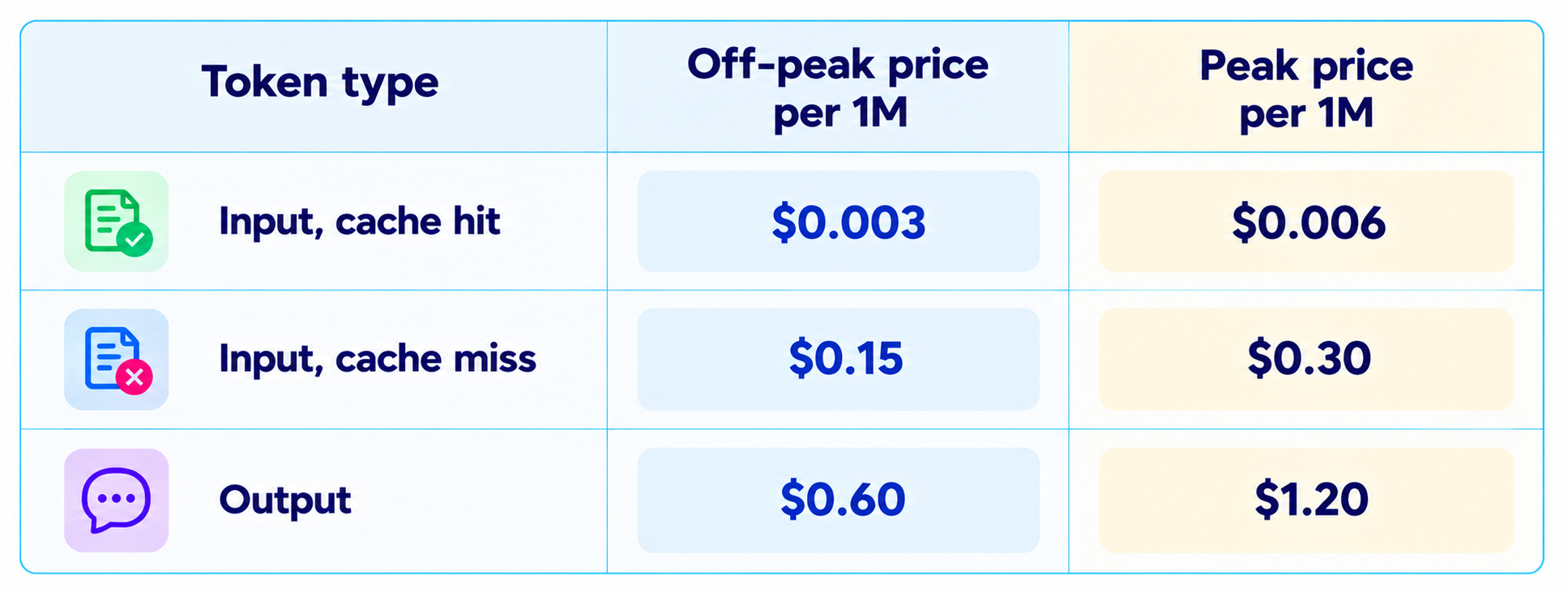
DeepSeek defines peak periods as 01:00-04:00 UTC and 06:00-10:00 UTC, Monday through Friday, excluding Chinese public holidays. Other hours, including weekends and Chinese public holidays, are off-peak. These windows are expressed in UTC, so convert them carefully when scheduling in another time zone.
Cache-hit pricing matters for agents because a large system prompt, repository instructions or conversation history may be sent repeatedly. When those tokens qualify as cache hits, input cost can be much lower than the cache-miss rate. Reuse stable context where appropriate, but do not preserve irrelevant history solely to chase cache hits.
11. Why Shorter Outputs Can Lower Task Cost
DeepSeek says the 1017 checkpoint completes tasks faster and generates shorter outputs. This matters because output tokens cost more than cache-hit input tokens, and an agent can produce a lot of text across multiple turns. Shorter outputs can reduce the token bill and the time spent waiting.
The important metric is cost per successfully completed task, not cost per million tokens alone. If a model needs three attempts to fix a bug while a stronger model succeeds on the first attempt, a cheaper token rate may not produce the cheaper outcome. If Flash 1017 solves routine tasks with fewer retries and shorter responses, savings can compound across high-volume workflows.
DeepSeek's published DeepSWE cost chart illustrates this performance-cost tradeoff. Treat cost per task as specific to the model, harness, effort setting and benchmark run. Reproduce the test with your own tasks before using the figure in a budget forecast.
12. API Compatibility and Developer Setup
The API model identifier remains deepseek-flash, so most existing integrations should not require a model-name change. DeepSeek documents OpenAI-compatible and Anthropic-compatible API formats, tool calls, JSON output, a Responses API and image input. Compatibility reduces integration work, but it does not guarantee every provider-specific parameter behaves identically across SDKs.
Before rolling out the checkpoint, run a regression suite covering ordinary completions, thinking and non-thinking mode, tool calls, JSON validation, image input, long prompts and timeout handling. If your framework manages its own system prompts or tools, verify that it supports the current model's behavior.
DeepSeek recommends upgrading DeepSeek Harness to v0.2.1-rc.1 or later for the best experience with the new checkpoint. The announcement also names Tencent CodeBuddy and WorkBuddy among the target environments. Check your tool's release notes before assuming an older harness supports all current behaviors.
13. DeepSeek Search and Fetch APIs
Alongside the 1017 release, DeepSeek announced Search and Fetch APIs for agents and retrieval-augmented generation systems. Search returns ranked web results, while Fetch retrieves a page and returns its content as Markdown. These are separate APIs, not just model tokens, and they can give a coding or research agent access to current web material.
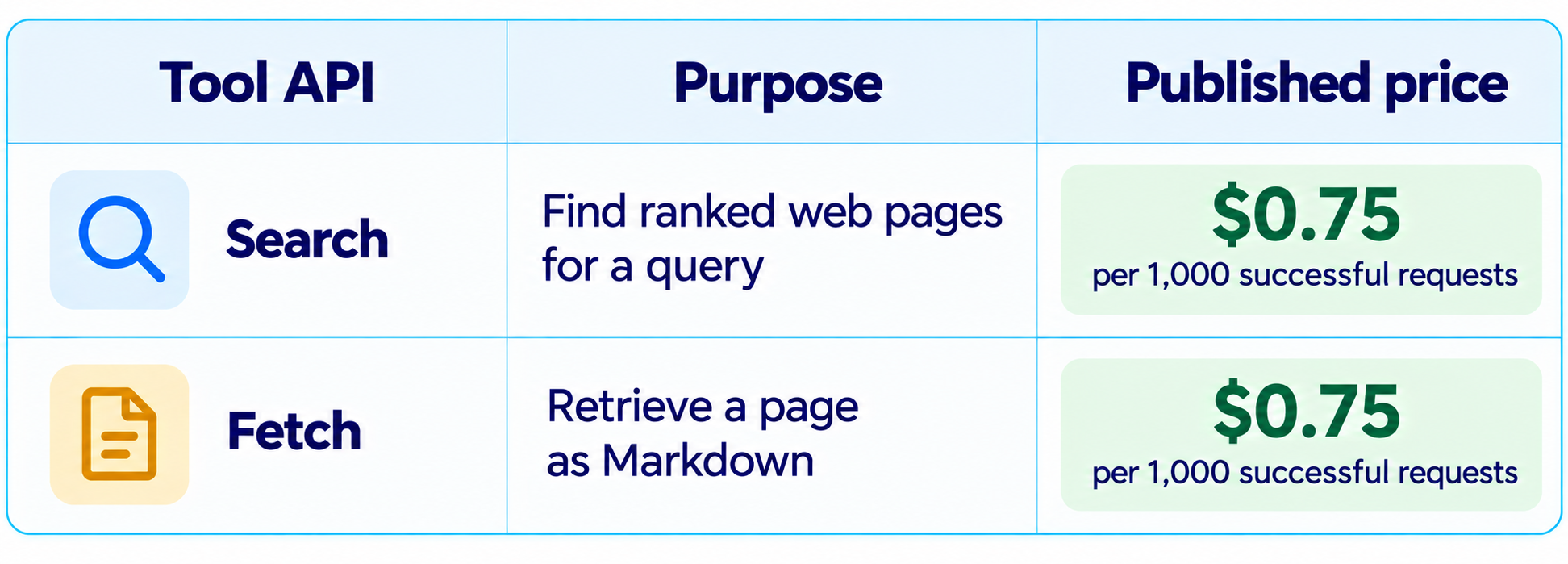
A typical workflow is to search for relevant documentation, fetch the best pages, extract details and ask the model to synthesize evidence. Fetch can fail when a site blocks access or returns unsupported content, so the agent should handle missing pages and use alternate sources rather than invent page contents.
DeepSeek says Search and Fetch calls through server-side tools in DeepSeek Harness, Claude Code and Codex are free for DeepSeek API users until October 31, 2026, at 16:00 UTC. Check the official announcement for current terms before budgeting a workflow around the promotion.
14. Flash 1017 vs the Previous Checkpoint
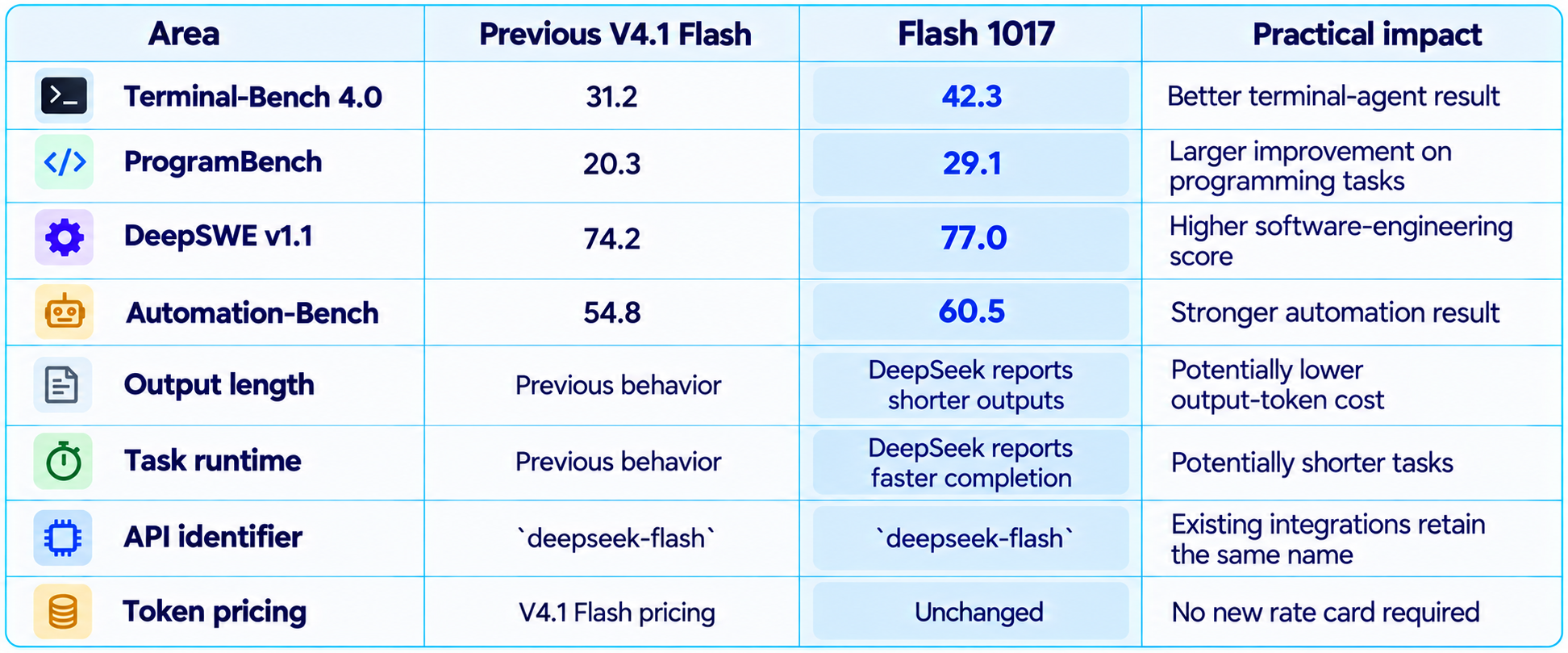
This is a practical upgrade because the API stays stable while the published benchmark performance improves. Rerun your own evaluation set against the old and new checkpoints, keeping tools, system prompts, sampling settings and success criteria the same. That reveals whether the gains translate to your workload.
15. Flash 1017 vs GPT-6 Astra and Claude Opus 5
A model comparison needs to be benchmark-specific. DeepSeek's published table shows Flash 1017 ahead of GPT-5.6 Sol and Claude Opus 5 on DeepSWE v1.1, Automation-Bench, Agents' Last Exam and Apex Bench. The same table shows Claude Opus 5 ahead on HLE, Terminal-Bench 4.0, ProgramBench, NL2Repo-Bench, Chartography and BabyVision, while GPT-5.6 Sol leads ZeroBench-main.
These comparisons support a narrow conclusion: Flash 1017 is competitive with expensive models on several agent evaluations, but it is not the winner across the suite. The official table names GPT-5.6 Sol, not GPT-6 Astra. Do not substitute GPT-6 Astra into the table without a directly comparable, sourced result.
Choose Flash 1017 when...
Consider a premium model when...
You need many low-cost coding or automation calls.
The task is unusually difficult or business-critical.
Your workload benefits from long context and image input.
Your own tests show a meaningful accuracy gap.
You want a worker model with an escalation path.
A specific benchmark or specialized capability matters most.
You can schedule flexible jobs off-peak.
Latency, reliability or capability outweighs token cost.
For model routing, see Model Routing for AI Coding Agents.
16. Is DeepSeek-V4.1-Flash-1017 Open Source?
DeepSeek has published a model repository for V4.1-Flash-1017 on Hugging Face and ModelScope, and the Hugging Face model card lists an MIT license. Developers can inspect the files and investigate self-hosting options with supported inference software.
DeepSeek-V4.1-Flash-1017 on Hugging Face
Downloadable weights do not mean a 552B-parameter model is easy to run on a single workstation. Memory requirements, quantization, sharding, inference engine support, bandwidth and serving concurrency all matter. The architecture activates fewer parameters per token than its total parameter count, but the complete weights and runtime still impose substantial deployment requirements. Test a supported cloud or multi-GPU setup before committing to local hosting.
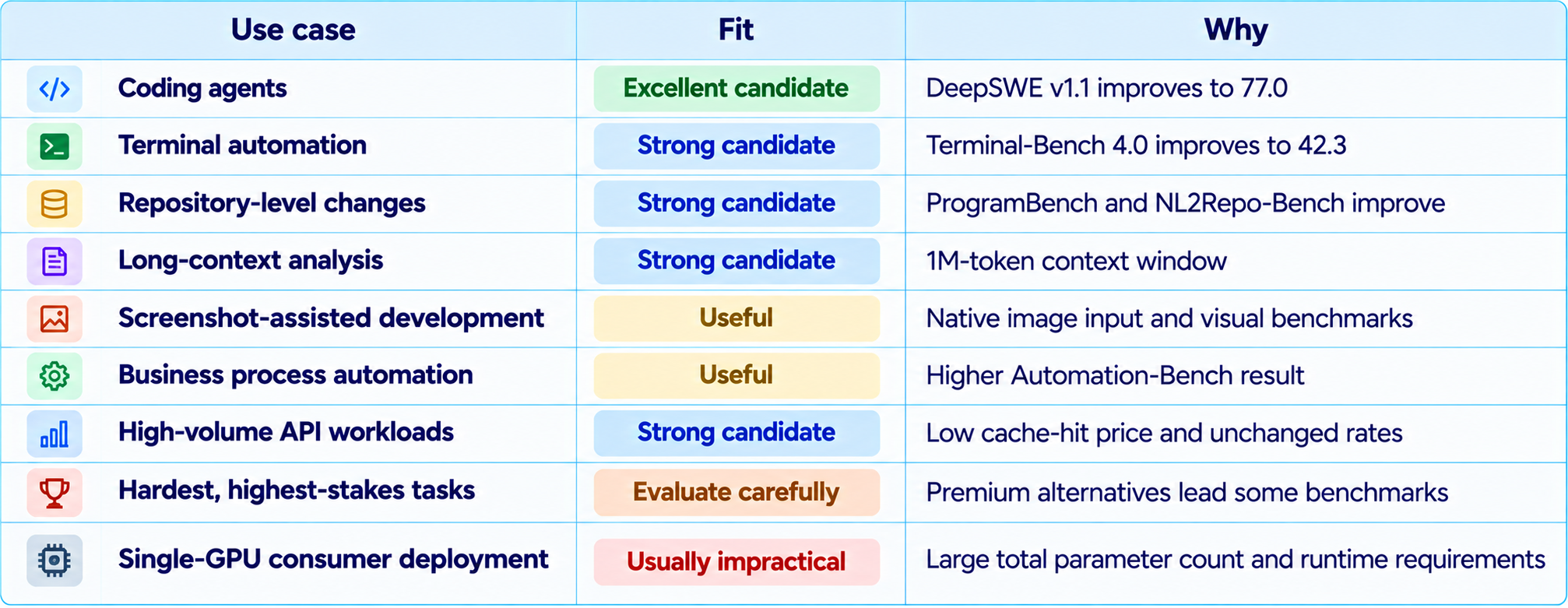
17. Best Use Cases
18. Limitations and Practical Risks
- The headline benchmark results are published by DeepSeek. Independent reproduction using identical harnesses is needed before treating them as universal rankings.
- Scores vary by benchmark version, tool access, harness, effort setting and pass@k method. Compare like with like.
- Flash 1017 does not lead every listed benchmark. Claude Opus 5 remains ahead on several of DeepSeek's own comparisons.
- Shorter output is useful only if the model still provides the explanation, evidence or code changes needed for the task.
- A 1M-token context window does not guarantee perfect retrieval from every long document or repository.
- Native image input helps with screenshots and diagrams, but generated UI changes still require browser checks and tests.
- Open weights do not make deployment cheap or simple. The total model size makes multi-GPU or specialized serving infrastructure likely.
- Peak and off-peak pricing complicate forecasts. Use UTC schedules and recheck the live pricing page.
- Coding agents can make destructive changes or expose secrets if given excessive permissions. Use sandboxing, scoped credentials and human approval for sensitive actions.
19. Recommended Production Workflow
Start with a controlled evaluation, then introduce Flash 1017 as a worker model for a narrow set of workflows.
- Create a test set from real tasks: bug fixes, feature changes, test failures, documentation lookup and repository questions.
- Run the previous checkpoint and 1017 with identical prompts and tools wherever both are available.
- Measure task completion, tests passed, tool-call errors, wall-clock time, output tokens and cost per completed task.
- Use thinking mode for multi-step coding and planning; evaluate non-thinking mode for direct extraction or simpler responses.
- Reuse stable instructions and repository context where appropriate, while keeping irrelevant history out of prompts.
- Schedule flexible batch jobs during off-peak periods when the timing rules and workload permit it.
- Run agents in a sandbox, restrict filesystem and network access, and require approval for destructive operations.
- Add a fallback model for failed tests, repeated tool errors or high-risk tasks.
- Re-evaluate after changes to the API model, harness, system prompt or tool definitions.
20. How to Get Better Results From DeepSeek Flash 1017
The model's agentic strengths are easiest to use when the task is concrete and verifiable. A vague request such as 'improve this application' leaves the model to guess what success means. A better prompt states target behavior, files that may change, constraints, tests and the evidence to return.
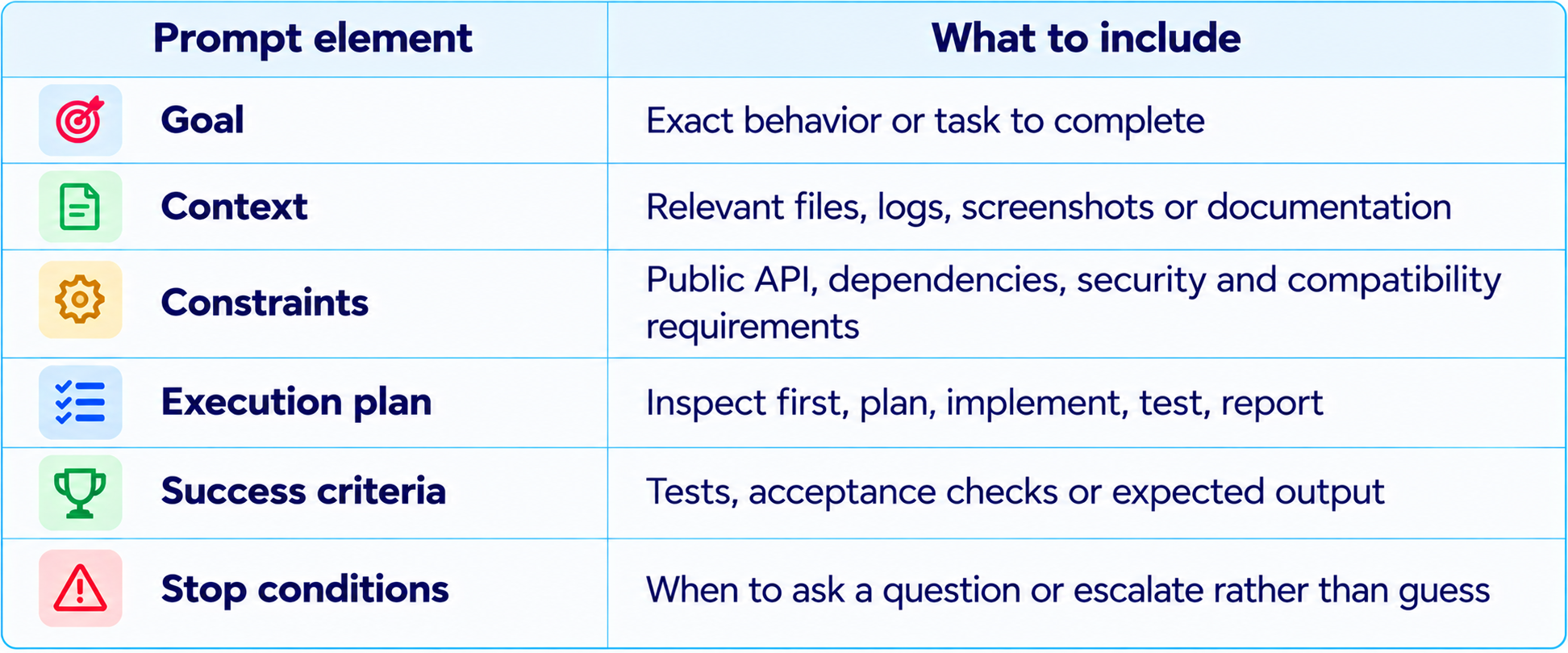
For reusable examples, see 100 Best DeepSeek Prompts 2026 (Copy-Paste). Use relevant context, specify output structure and verify high-impact claims.
21. Is DeepSeek-V4.1-Flash-1017 Worth It?
Yes, particularly if you build coding agents, terminal workflows or automation that makes many model calls. The 1017 checkpoint improves on the previous Flash release across every benchmark in DeepSeek's published comparison table, with especially large gains on Terminal-Bench 4.0, ProgramBench and Apex Bench. The API name and token rates stay the same, so evaluating the new version does not require a major integration rewrite.
The pricing model is a major part of the value proposition. At off-peak rates, cache-hit input costs $0.003 per million tokens, cache-miss input costs $0.15 and output costs $0.60. Those rates can make repeated agent calls economical, especially when stable context is reused and the model completes tasks with fewer retries.
The caveat is that benchmark wins are task-specific. Flash 1017 is not the universal best model for every reasoning, coding or visual workload. Run your own evaluation, keep a fallback for difficult tasks and compare cost per successful result rather than token price alone.
22. Final Verdict
DeepSeek-V4.1-Flash-1017 is a strong update to a model family built for affordable agentic work. It improves the published benchmark profile while preserving the existing API model identifier and price schedule. For developers, the upgrade is straightforward to test: keep the existing deepseek-flash integration and measure the difference on real tasks.
The strongest evidence is the breadth of the gains: 77.0 on DeepSWE v1.1, 42.3 on Terminal-Bench 4.0, 29.1 on ProgramBench, 68.2 on NL2Repo-Bench and 60.5 on Automation-Bench. The model also retains a 1M-token context, native image input, tool calls and structured JSON output. These capabilities make it relevant for coding agents, repository work, visual debugging and long-running automation.
Its economics are attractive when the task is a good fit. Off-peak cache-hit input is $0.003 per million tokens, cache-miss input is $0.15 and output is $0.60. DeepSeek also says the checkpoint completes tasks faster and writes shorter outputs, which can reduce total task cost. Track cost per successful completion.
Editorial rating: 9.2/10 for value, 9.0/10 for agentic coding potential, 8.8/10 for developer workflow fit and 9.0/10 overall. These are editorial ratings based on the published results and pricing, not standardized third-party scores.
Bottom line: DeepSeek-V4.1-Flash-1017 is worth testing as a default worker model for coding and automation agents. Use it where its benchmark profile and price match the workload, verify changes with tests, and route unusually difficult or high-risk tasks to a stronger model when your own evaluation shows that doing so improves reliability.
Frequently Asked Questions
What is DeepSeek-V4.1-Flash-1017?
It is the October 17, 2026 checkpoint update to DeepSeek V4.1 Flash, with improved published benchmark scores, shorter outputs and faster task completion.
What is the API model name?
Use deepseek-flash. DeepSeek says the API model identifier and calling method remain unchanged.
What are the main benchmark scores?
DeepSeek reports 77.0 on DeepSWE v1.1, 42.3 on Terminal-Bench 4.0, 29.1 on ProgramBench, 68.2 on NL2Repo-Bench and 60.5 on Automation-Bench v1.0.6.
How much does DeepSeek V4.1 Flash 1017 cost?
Off-peak rates are $0.003 per million cache-hit input tokens, $0.15 per million cache-miss input tokens and $0.60 per million output tokens. Peak rates are double.
What is the context window?
The official API pricing page lists a 1 million-token context window and maximum output of up to 384K tokens.
Does DeepSeek Flash 1017 support images?
Yes. The model supports native image input, alongside text input and text output.
Does it support tool calls and JSON output?
Yes. DeepSeek documents tool calling and JSON output support.
Is DeepSeek-V4.1-Flash-1017 open source?
Weights are published on Hugging Face and ModelScope, and the Hugging Face model card lists an MIT license. Self-hosting still requires substantial infrastructure.
Is it better than Claude Opus 5?
Not across every benchmark. DeepSeek's table shows Flash 1017 ahead on several agent evaluations, while Opus 5 leads on other reasoning, terminal and visual benchmarks.
Is it better than GPT-6 Astra?
The official comparison table used for this review lists GPT-5.6 Sol, not GPT-6 Astra. A direct conclusion about GPT-6 Astra requires comparable, verified benchmark results.
What changed from the September model?
DeepSeek reports higher scores across its published suite, faster task completion and shorter output length. The API identifier and token prices remain unchanged.
Who should use DeepSeek Flash 1017?
Developers building coding agents, repository tools, terminal automation, long-context workflows and cost-sensitive agent systems should evaluate it.
Recommended Blogs
Resources & Community
Join our community of 70,000+ AI enthusiasts and learn to build practical AI applications. Build Fast with AI helps developers, creators and teams understand new models and put them to work in real projects.
Agentic AI Launchpad 2026
A structured six-week cohort program for learning to build and deploy real-world agentic AI systems, with live sessions, expert mentorship, project reviews and a builder community.
Explore the program: Agentic AI Launchpad 2026
Free AI Resources
Access free tools, workshops and short-form learning to keep building.

